Multi-Client SEO Tracking: How to Avoid the Spreadsheet Nightmare
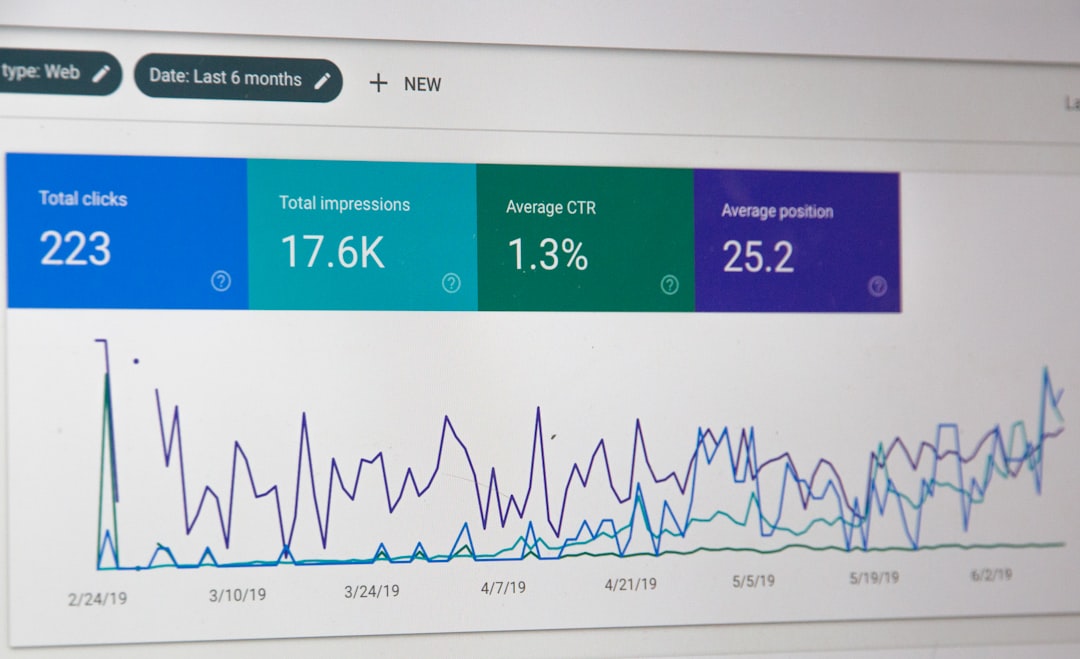
Every agency starts the same way. One client, one Google Sheet, a handful of keywords tracked manually every Monday morning. It works. Then you land a second client and duplicate the tab. Still manageable. But somewhere around client five or six, multi-client SEO tracking in spreadsheets stops being “scrappy” and starts being a liability — eating hours that should go toward strategy, burying insights under formatting gymnastics, and creating data integrity risks that can embarrass you in a client call.
This guide breaks down exactly why spreadsheets fail at scale for agency keyword tracking, what a proper rank tracking setup looks like, and how to build workflows that hold up whether you manage 10 clients or 100.
Why Spreadsheets Break Down for Agency Keyword Tracking
Spreadsheets are seductive. They’re free, flexible, and everyone knows how to use them. That flexibility is exactly the problem. There’s no enforced structure, no automated data pipeline, and no guardrails against human error. What feels like control at two clients becomes chaos at ten.
The core issues:
- Version control is nonexistent. Someone downloads a copy, makes edits offline, uploads it — and now two versions of truth exist. Which one has the latest keyword additions? Nobody’s sure.
- Manual data entry invites errors. Transposing a rank from position 12 to position 21 seems minor until it triggers a false alarm or, worse, masks a real problem.
- Formatting eats analysis time. Agencies report spending up to 40% of their SEO workflow on reporting tasks rather than actual optimization work. Conditional formatting, chart updates, cross-tab references — none of it moves the needle for clients.
- Client-ready reports require a second round of work. Raw tracking sheets rarely look professional enough to share. So you rebuild the data in slides or a separate doc, doubling the effort.
The Tipping Point: When Manual Tracking Costs More Than It Saves
The math is straightforward. Say you track 50 keywords per client and spend 20 minutes per client per week on manual rank checks, data entry, and formatting. At five clients, that’s roughly 100 minutes a week — annoying but survivable. At 15 clients, it’s five hours every single week. At 30 clients, you need a dedicated person just to wrangle spreadsheets.
That’s not a tracking system. That’s a full-time data entry job disguised as SEO work.
The tipping point usually hits between 5 and 10 clients. That’s when agencies notice their senior strategists spending mornings copy-pasting rank data instead of analyzing it. The opportunity cost is brutal: every hour spent on data wrangling is an hour not spent on content strategy, link building outreach, or technical audits — the things clients actually pay for.
Common Data Integrity Problems With Shared Sheets
Shared spreadsheets develop problems the way old houses develop leaks — slowly, then all at once:
- Broken formulas from someone inserting a row in the wrong place, silently returning #REF! errors for weeks before anyone notices
- Overwritten historical data when a team member pastes new rankings into the wrong date column
- Inconsistent keyword formatting — “plumber near me” in one tab, “Plumber Near Me” in another, “plumber near me [exact]” in a third, all supposedly tracking the same term
- Missing historical snapshots because someone forgot to log the data one week and there’s no automated fallback
These aren’t hypotheticals. They’re Tuesday. And when a client asks why their rankings “suddenly dropped” and the real answer is “someone broke a VLOOKUP three weeks ago,” that’s a credibility hit no agency can afford.

What a Proper Multi-Client SEO Tracking Setup Looks Like
The goal isn’t just to replace spreadsheets with software. It’s to build an architecture where rank tracking multi client workflows run with minimal friction, data stays clean without babysitting, and anyone on the team can pull insights in minutes, not hours.
Think of it as building an SEO workspace — a centralized environment where every client lives under one roof but stays neatly separated.
The core components:
- Centralized dashboard with a bird’s-eye view across all clients
- Per-client keyword groups organized by campaign, service line, or location
- Automated daily or weekly rank pulls that eliminate manual data entry entirely
- Role-based access so clients see their data, team members see what they need, and nobody accidentally edits someone else’s project
- Annotation and notes tied to specific dates (algorithm updates, content launches, technical changes)
Organizing Keywords by Client, Campaign, and Location
Flat keyword lists are a trap. When you’re managing agency keyword tracking across dozens of accounts, you need hierarchy.
A proven structure:
- Client level — the top container
- Campaign or service line — within each client, group keywords by what they map to (e.g., “Residential Plumbing,” “Commercial HVAC,” “Emergency Services”)
- Location — critical for local SEO clients. A plumber in Dallas and a plumber in Fort Worth need separate tracking even if the keywords look identical
- Intent tags — mark keywords as informational, transactional, or navigational so you can prioritize reporting around revenue-driving terms
This tagging approach also pays dividends when you scale into programmatic SEO playbook 2026 strategies, where keyword organization at scale becomes the backbone of automated content production.
Automated Rank Snapshots vs. Manual Check-Ins
| Factor | Automated Tracking | Manual Check-Ins |
|---|---|---|
| Accuracy | Consistent — same methodology every pull | Variable — depends on who’s checking, what device, whether they’re logged in |
| Time investment | Near zero after setup | 15–30 min per client per session |
| Historical consistency | Every snapshot captured automatically | Gaps whenever someone forgets or is on vacation |
| Scalability | Handles 50 clients as easily as 5 | Linear time increase per client |
| Cost | Software subscription | Staff hours (often more expensive) |
The case for automation isn’t even close. Manual rank checks using incognito browsers are unreliable — Google personalizes results based on location, search history, and device even in private browsing modes. Automated tracking tools pull from consistent data center locations and store every snapshot, giving you a clean historical trendline that no amount of careful spreadsheet logging can replicate.
Building a Unified SEO Workspace for Your Team
An effective SEO workspace goes beyond rank tracking. It becomes the operational hub for your agency’s SEO delivery. Here’s what that looks like in practice:
- Shared dashboards where account managers see their clients’ status at a glance — who’s trending up, who needs attention, who has a scheduled report due
- Client-level permissions that let you share a live view with stakeholders without risking edits or exposing other clients’ data
- Annotation capabilities so when Google rolls out a core update, you mark the date once and it appears across every client’s timeline
- Integration with reporting tools — the workspace feeds data into your monthly reports automatically, eliminating the copy-paste-format cycle
When your team operates from a single workspace, onboarding a new team member takes hours instead of weeks. Everything is documented by the system itself. Check out the blog for more on building efficient SEO operations.

Practical Tips for Scaling Rank Tracking Across Dozens of Clients
Tools matter, but workflow design matters more. An expensive tracking platform run by a disorganized team still produces messy results. Here’s how to build processes that scale.
Standardize Your Keyword Research Intake Process
Every new client should go through the same onboarding template before a single keyword gets tracked. No exceptions.
Your intake checklist:
- Seed keywords — the 10–20 terms the client considers most important (their perspective matters even if you’ll refine it)
- Competitor domains — 3–5 competitors to benchmark against
- Target locations — specific cities, states, or regions where rankings matter
- Tracking frequency — daily, weekly, or custom schedule based on campaign intensity
- Reporting cadence and format — monthly PDF? Live dashboard access? Both?
- KPI definitions — what does “success” look like? Page-one rankings? Traffic thresholds? Lead volume?
Standardization eliminates the “every client is set up differently” problem that makes agencies fragile. When someone goes on parental leave, their replacement can pick up any account and immediately understand the tracking structure.
Set Alert Thresholds Instead of Reviewing Every Keyword Daily
Scanning 500 keywords across 10 clients every morning is a waste of human attention. Most of those keywords didn’t move. Set up alerts that surface only the changes worth acting on:
- Drops of 5+ positions on priority keywords
- Page-one exits — any keyword falling from positions 1–10 to 11+
- New page-one entries — celebrate wins and investigate what worked
- Competitor overtakes on tracked head terms
This shifts your team from reactive data scanning to proactive strategy. When an alert fires, you investigate. When it doesn’t, you spend that time on optimization work instead.
Create Client-Facing Reports That Tell a Story
Clients don’t care that “keyword X moved from position 14 to position 11.” They care about what that means for their business.
Effective rank tracking reports connect the dots:
- Ranking movement → traffic impact — “Your core service keyword entered page one, contributing to a 23% increase in organic sessions to your services page.”
- Competitive context — “You now outrank two of your three main competitors for this term.”
- Revenue correlation — “Keywords in the top 5 are driving an estimated $4,200/month in traffic value based on equivalent PPC costs.”
- What’s next — “We’re targeting these three keywords for improvement next month based on their proximity to page one and commercial intent.”
This is the difference between a report that gets glanced at and one that gets forwarded to the CEO. If you’re looking for inspiration on how to structure data-driven content strategies that tie into reporting, the welcome page has useful starting points.
Frequently Asked Questions About Multi-Client Rank Tracking
How Often Should I Track Rankings for Each Client?
It depends on campaign phase and client tier. Daily tracking makes sense during active campaigns — site launches, major content pushes, or post-migration monitoring. Weekly tracking works for maintenance-phase clients where you’re monitoring stability rather than chasing rapid movement.
Avoid the trap of tracking daily but only reviewing monthly. High-frequency data creates noise (rankings fluctuate day-to-day naturally), so pair daily tracking with weekly or biweekly analysis windows to separate signal from noise.
What Is the Best Way to Handle Local vs. National Keyword Tracking?
A single national rank check for a local business is essentially meaningless. Someone searching “emergency dentist” in Phoenix sees completely different results than someone in Boston.
For local SEO clients, track keywords at the city or zip code level. Use location-specific rank pulls rather than relying on location modifiers appended to keywords (e.g., “dentist Phoenix”). Both approaches have value, but geo-targeted rank checks reflect what actual local searchers see.
For businesses serving multiple locations, create separate keyword groups per location within your SEO workspace. This prevents the common mistake of averaging rankings across geographies and hiding underperformance in specific markets.
How Many Keywords Should I Track Per Client?
There’s no universal number, but here are practical guidelines:
| Client Type | Recommended Keywords | Rationale |
|---|---|---|
| Small local business | 20–50 | Focused service area, limited pages |
| Regional multi-location | 50–150 | Core terms × number of locations |
| Mid-size e-commerce | 100–300 | Category and product-level terms |
| Enterprise / national brand | 300–1,000+ | Broad keyword universe across segments |
The biggest mistake agencies make is tracking vanity keywords that look impressive but don’t drive revenue. A position 3 ranking for a term with 50 monthly searches and high purchase intent is worth more than a position 1 ranking for an informational term with 10,000 searches and zero conversion potential. Tie keyword selection to business outcomes.
Can I Give Clients Read-Only Access to Their Own Data?
Yes, and you should. Transparency builds trust. When clients can log in and see their rankings anytime, they stop sending “how are my rankings?” emails — which saves everyone time.
Role-based permissions in a proper SEO workspace let you:
- Grant read-only access to client stakeholders
- Restrict visibility to only that client’s data (critical for agency confidentiality)
- Allow clients to see dashboards and trends without editing capabilities
- Control whether clients see competitor benchmarking data or just their own metrics
Some agencies resist this, worrying clients will misinterpret daily fluctuations. The solution isn’t less transparency — it’s better education. Add contextual notes and annotations that explain what clients are seeing.
How Do I Migrate Existing Tracking Data Out of Spreadsheets?
Moving historical data from spreadsheets into a structured tracking system takes effort upfront but pays off immediately. Here’s the process:
- Audit your existing sheets. Identify which data is clean and which is corrupted (broken formulas, missing dates, duplicate keywords).
- Standardize keyword formatting. Lowercase everything, remove brackets and match-type notation, deduplicate.
- Export to CSV with consistent column headers: keyword, date, rank, URL, location.
- Clean the data — remove rows with missing ranks or obviously incorrect values (rank 0, rank 999).
- Import into your new system using whatever bulk upload method it supports. Most platforms accept CSV imports with historical date mapping.
- Verify a sample. Spot-check 20–30 data points against your original sheets to confirm the migration preserved accuracy.
You won’t save everything. Some historical data in messy spreadsheets is genuinely unrecoverable. Accept that and focus on getting clean data flowing forward.
What Metrics Should I Track Beyond Keyword Position?
Raw keyword position is just one dimension. A complete multi-client SEO tracking setup also monitors:
- Search visibility score — an aggregate metric that weights your rankings by search volume, giving you a single number that represents overall organic presence
- SERP feature presence — are you winning featured snippets, local packs, image carousels, or People Also Ask boxes? Ranking #4 with a featured snippet is better than ranking #1 without one
- Estimated traffic value — what would you pay in Google Ads for the same clicks? This translates SEO results into a language CFOs understand
- Ranking distribution — how many keywords are in positions 1–3, 4–10, 11–20, and 21+? This shows the shape of your progress, not just individual keyword wins
- Share of voice vs. competitors — what percentage of available organic visibility are you capturing compared to tracked competitors?
These complementary metrics transform rank tracking from a vanity exercise into a strategic intelligence system.
Stop Wrestling With Tabs and Start Scaling Your Agency
The agencies that grow past 20, 50, 100 clients aren’t the ones with the best spreadsheets. They’re the ones that built tracking infrastructure early enough that adding a new client takes 15 minutes, not half a day.
Here’s a quick audit you can do right now: look at your current multi-client SEO tracking setup and ask one question — could it handle double your current client count without adding headcount? If the answer is no, the system is the bottleneck, not your team.
The shift from spreadsheets to a proper SEO workspace isn’t about buying software. It’s about reclaiming the hours your team currently spends on data janitor work and redirecting that energy toward the strategic thinking that actually grows accounts and retains clients. That’s not an operational convenience. That’s a competitive advantage.