Perplexity SEO: What Actually Influences AI Search Results and Citations
Perplexity SEO is the practice of optimizing content so it gets cited as a source in Perplexity AI’s answer engine. Unlike traditional search, where you compete for link positions on a results page, Perplexity synthesizes information from multiple sources and cites the ones it deems most authoritative, well-structured, and directly relevant to a user’s query. Getting cited means your brand, your data, and your URL appear inside the answer itself — which is rapidly becoming the new front page of search.
This isn’t a theoretical discipline anymore. As of early 2025, Perplexity reported over 100 million queries per week, and that number is climbing. The users asking those queries aren’t clicking through ten blue links. They’re reading synthesized answers and selectively clicking the cited sources embedded within them. If your content isn’t structured for this environment, you’re invisible to a growing segment of searchers.
How Perplexity Decides Which Sources to Cite
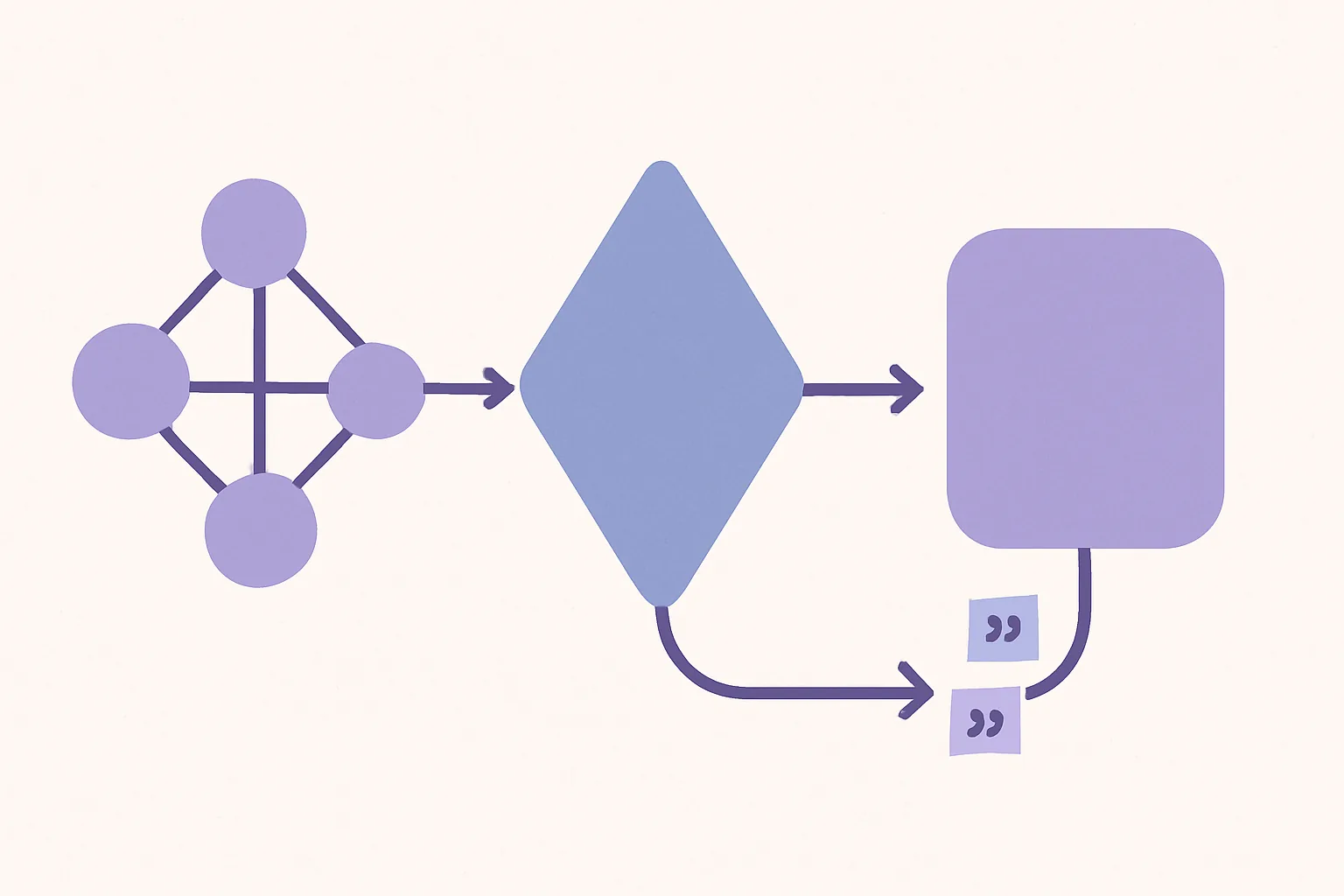
Perplexity operates as a retrieval-augmented generation (RAG) system. It receives a query, searches the web (or its index) for relevant sources, retrieves the most promising pages, then uses a large language model to synthesize an answer while attributing claims to specific URLs. The sources it selects aren’t random. They’re chosen based on a combination of authority, relevance, structure, and accessibility.
This is AI answer engine SEO in its purest form — and it’s fundamentally different from the game most SEOs have been playing for two decades.
The Fundamental Difference Between Traditional Search and AI Answer Engines
Traditional search engines return a ranked list of links. You click one, land on a page, and evaluate the information yourself. The search engine’s job ends at the results page.
Perplexity doesn’t work this way. It reads the pages for you, extracts the relevant information, and presents a cohesive answer with inline citations. The user might never visit your site — but if they do, it’s because your citation earned enough trust to warrant a click.
This changes content strategy in three critical ways:
- Being on page one isn’t enough. Your content needs to be extractable — written so an AI system can pull a clean, accurate answer from it.
- The competition isn’t just for clicks. It’s for citation slots within a single synthesized answer. There might only be 3–6 sources cited per response.
- Authority signals carry even more weight. When an AI system chooses which sources to trust for factual claims, it leans hard on credibility indicators.
If you’re already thinking about how this intersects with scalable content strategies, the Programmatic SEO Playbook 2026 covers how to build content at scale while maintaining the quality signals AI systems reward.
Where Perplexity Pulls Its Source Data From
Perplexity uses its own web crawler — PerplexityBot — to index pages across the web. It also appears to leverage third-party search APIs (including Bing’s index) for real-time retrieval, particularly for queries requiring current information.
PerplexityBot identifies itself in your server logs with the user agent string PerplexityBot. If your robots.txt file blocks it, Perplexity can’t crawl your pages directly. That doesn’t always mean total invisibility (it may still find your content through other indexing pipelines), but it significantly reduces your chances of being cited.
Real-time queries — “What’s the current price of Bitcoin?” or “Who won last night’s game?” — pull from live web results. Evergreen queries may rely more on Perplexity’s existing index. This dual approach means both freshness and established authority matter, depending on the query type.
The Core Perplexity Ranking Factors: Breaking Down What Matters
No one outside Perplexity’s engineering team knows the exact weighting of every signal. But by analyzing citation patterns across thousands of queries, testing content variations, and understanding how RAG systems work architecturally, a clear picture emerges.
Domain Authority and Source Credibility Signals
Perplexity citations skew heavily toward established, high-authority domains. Major publications, government sites, academic institutions, and well-known industry platforms appear disproportionately in citations.
This isn’t surprising. When a language model needs to decide which of fifteen potential sources to cite for a factual claim, it defaults to the one with the strongest credibility signals. Those signals include:
- Backlink profile strength. Domains with robust, natural backlink profiles get cited more frequently.
- Brand recognition. Perplexity’s underlying models have been trained on vast corpora of text. Brands that appear frequently in training data carry implicit authority.
- Domain history and trust. Newer domains with thin track records face an uphill battle against established competitors.
- HTTPS and basic trust signals. These are table stakes, not differentiators — but their absence is a red flag.
Does this mean smaller sites can’t get cited? No. But they need to compensate with exceptional content quality, unique data, or niche topical authority that larger sites don’t cover.
Content Structure, Clarity, and Direct Answer Formatting
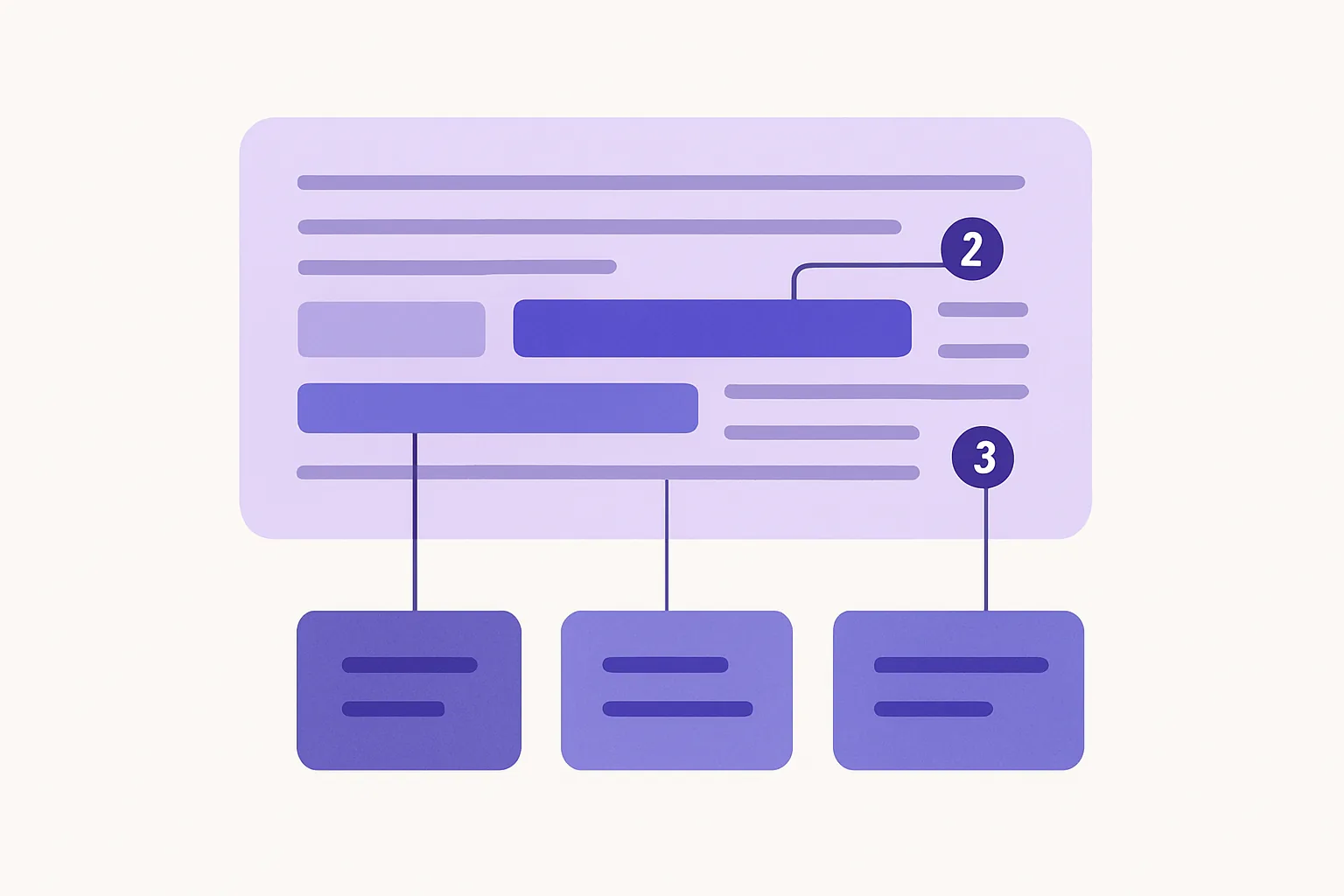
This is where many sites leave the most opportunity on the table. RAG systems don’t read content the way humans do. They scan for extractable answers — clear, concise statements that directly address a query.
Content that gets cited tends to share these structural traits:
- Questions answered in the first sentence or two of a section. Don’t bury the answer under three paragraphs of context.
- Short, declarative paragraphs. Walls of text make extraction harder.
- Descriptive headings that mirror natural queries. An H2 like “How Much Does X Cost in 2025?” is far more extractable than “Pricing Considerations.”
- Lists, tables, and structured data. These formats are inherently easier for AI systems to parse.
- Definitions stated explicitly. “Perplexity SEO is the practice of…” gives the AI a clean entity definition to work with.
Think of it this way: if a human skimming your article at high speed could find the answer in under five seconds, an AI system probably can too.
Topical Depth and Factual Accuracy
Shallow content that restates surface-level information from other sources rarely gets cited. Perplexity’s system appears to favor sources that demonstrate genuine expertise — the kind you can’t fake by rewriting someone else’s article.
Signals of topical depth include:
- Original research and proprietary data. If you ran the survey, collected the data, or conducted the analysis, you become the primary source.
- Specific statistics with context. “Email open rates average 21.33% across industries” is citable. “Email open rates vary” is not.
- Expert-level nuance. Content that addresses edge cases, exceptions, and counterarguments signals deeper understanding.
- Citations to primary sources within your own content. Linking to original studies, official documentation, and authoritative references reinforces your credibility.
Pages that function as comprehensive reference material on a topic — covering it more thoroughly than any single competitor — tend to accumulate perplexity citations over time.
Freshness, Recency, and Real-Time Relevance
For time-sensitive queries, Perplexity aggressively favors recent content. A page published yesterday about a breaking news event will outrank a comprehensive guide published last year, even if the guide has stronger authority signals.
For evergreen topics, the calculus shifts. Publication date still matters — a 2019 guide competing against a 2024 guide on the same topic will usually lose — but the margin is smaller. What matters more is whether the content reflects current reality.
Practical freshness strategies:
- Update cornerstone content at least quarterly with new data, examples, and timestamps.
- Include “Last updated: [date]” prominently on the page. Both users and AI systems use this as a recency signal.
- Publish timely content around industry changes, algorithm updates, and emerging trends.
- Remove or update outdated statistics that could flag your content as stale.
Technical Accessibility and Crawlability
You can write the best content on the internet, and none of it matters if PerplexityBot can’t access it.
Technical factors that affect your visibility in AI answer engines:
| Factor | Impact on Perplexity Visibility |
|---|---|
| PerplexityBot allowed in robots.txt | Critical — blocking it eliminates direct crawling |
| Page load speed | Moderate — slow pages may time out during retrieval |
| Clean HTML structure | High — semantic HTML makes content extraction easier |
| Schema markup (FAQ, Article, HowTo) | Moderate — helps AI systems understand content type and structure |
| JavaScript-rendered content | Variable — content hidden behind heavy JS may not be accessible |
| Paywall or login gate | High negative impact — gated content is rarely cited |
| Mobile responsiveness | Low direct impact on AI crawling, but correlates with overall quality signals |
Your robots.txt configuration deserves specific attention. Many sites use blanket blocks against AI crawlers without realizing they’re also blocking PerplexityBot. Check yours.
Practical Strategies to Improve Your Perplexity Citations
Theory is useful. But you need to actually do things. Here’s what moves the needle.
Write Content That Directly Answers Specific Questions
The single highest-leverage tactic for AI answer engine SEO is structuring content around the questions people actually ask — then answering those questions immediately, clearly, and completely.
Here’s an example of ineffective formatting:
“There are many factors to consider when thinking about the cost of solar panels. The industry has evolved significantly over the past decade, and pricing varies based on numerous variables…”
An AI system reading this paragraph learns nothing citable. Compare it to:
“The average cost of residential solar panels in the United States is $2.95 per watt as of Q1 2025, which translates to roughly $20,650 for a typical 7kW system before federal tax credits.”
The second version gives Perplexity a concrete, citable fact. Lead with the answer. Expand afterward.
Build Topical Authority Across Content Clusters
Perplexity doesn’t evaluate pages in isolation. Sites that demonstrate broad, deep coverage of a topic area earn more citations than sites with a single strong page surrounded by unrelated content.
Build content clusters: a comprehensive pillar page supported by detailed subtopic articles, all internally linked. This signals to both traditional search engines and AI systems that your site is an authority on the subject.
For example, a site covering AI search optimization might have:
- A pillar page on AI answer engine SEO
- Supporting articles on specific platforms, technical implementation, content strategy, and measurement
- Internal links connecting all pieces into a coherent knowledge hub
The Contentify blog demonstrates this cluster approach across its content library, connecting related topics into navigable, interlinked resources.
Leverage Original Data, Expert Quotes, and Unique Insights
AI systems are trained to identify and prioritize primary sources. When five articles all cite the same statistic, Perplexity traces it back to the original source and cites that one.
Ways to become the primary source:
- Conduct original surveys or research. Even small-scale studies with proprietary data are more citable than commentary on someone else’s research.
- Include expert quotes with attribution. Named experts with credentials add authority that AI systems recognize.
- Share proprietary metrics. If your platform processes data that reveals industry trends, publish those insights.
- Offer unique frameworks or methodologies. Original thinking gets cited. Rehashed thinking doesn’t.
Monitor Your Visibility in AI Answer Engines
You can’t improve what you don’t measure. Tracking your perplexity ranking and citation presence requires a mix of manual and automated approaches.
Manual testing: Run queries related to your target topics in Perplexity and check whether your content appears in the citations. Do this regularly — citation sources shift over time.
Referral traffic analysis: Check your analytics for traffic from perplexity.ai as a referral source. Growing referral traffic from Perplexity indicates increasing citation frequency.
Emerging tools: Several SEO platforms are beginning to offer AI citation tracking features. These tools automatically monitor whether your URLs appear in AI-generated answers across multiple platforms. The space is young, but it’s maturing fast.
Search console data: While Google Search Console won’t show Perplexity data directly, you can monitor PerplexityBot’s crawl activity in your server logs to confirm it’s accessing your content.
Common Mistakes That Prevent AI Citation and Visibility
Getting cited requires doing things right. But it also requires not doing things wrong. These are the most common self-inflicted wounds.
Blocking PerplexityBot Without Realizing It
This happens more often than you’d think. A well-meaning developer adds a broad AI crawler block to robots.txt:
User-agent: *Bot*
Disallow: /
Or they specifically block AI crawlers they’ve heard about without considering the downstream effects. Some content management platforms include AI crawler blocks in their default settings.
Fix it: Review your robots.txt file. If you want Perplexity to index your content, ensure PerplexityBot is explicitly allowed:
User-agent: PerplexityBot
Allow: /
Check your CDN and firewall settings too. Some security configurations block bot traffic that doesn’t match expected patterns.
Publishing Shallow or Duplicative Content
Content that exists solely to target a keyword — without adding genuine value beyond what’s already available — won’t earn citations. Perplexity has access to hundreds or thousands of pages on any given topic. It selects the ones that provide the clearest, most authoritative, most complete answers.
If your page says the same thing as twenty other pages, but less thoroughly, it won’t be chosen. The bar for citation-worthy content is high and getting higher.
Avoid:
- Rewriting competitor articles without adding new information
- Publishing thin pages that cover topics superficially
- Using filler content to pad word count
- Overly promotional copy that prioritizes selling over informing
If you’re exploring how to create substantial content efficiently at scale, the Welcome page outlines approaches that balance volume with quality — a critical tension in AI-optimized content.
Frequently Asked Questions About Perplexity SEO
What Is Perplexity SEO and Why Does It Matter?
Perplexity SEO is the practice of optimizing web content to increase its chances of being cited as a source in Perplexity AI’s search answers. It matters because AI-powered search is capturing a growing share of informational queries, and being cited in these answers drives qualified referral traffic and brand visibility.
Does Traditional SEO Still Help With Perplexity Ranking?
Yes. Strong traditional SEO foundations — domain authority, clean site architecture, relevant content, quality backlinks — directly support perplexity ranking. AI answer engines and traditional search engines share many underlying quality signals. The difference is that AI systems place additional emphasis on content extractability, direct answer formatting, and factual precision.
How Do Perplexity Citations Work?
Perplexity displays numbered inline citations within its generated answers. Each citation links to a specific source URL. Users can click these citations to visit the original page. Citations appear as small numbered superscripts within the text, and the full source list appears at the bottom or side of the answer. For content creators, each citation represents both a brand mention and a potential traffic source.
Can You Submit Your Site Directly to Perplexity?
As of mid-2025, Perplexity does not offer a formal site submission tool equivalent to Google Search Console. Discovery happens through PerplexityBot’s web crawling, third-party search indexes, and user queries that trigger real-time web searches. The best way to ensure your site is discoverable is to allow PerplexityBot access, maintain strong traditional SEO, and publish content that addresses queries people actually ask.
How Long Does It Take to Appear in Perplexity Results?
There’s no fixed timeline. Pages from high-authority domains with strong existing indexing can appear in Perplexity citations within days of publication. Newer sites or pages without existing authority may take weeks or months. For real-time queries, Perplexity performs live web searches, so fresh content can appear almost immediately if it’s accessible and relevant.
Does Schema Markup Improve AI Answer Engine Visibility?
Schema markup helps AI systems understand the structure and type of your content. FAQ schema, Article schema, and HowTo schema are particularly useful because they explicitly define question-answer pairs and content hierarchies. While schema alone won’t guarantee citations, it removes ambiguity about what your content covers and how it’s organized — which makes extraction easier.
Is AI Answer Engine SEO Different From Generative Engine Optimization?
These terms describe overlapping concepts. Generative Engine Optimization (GEO) is the broadest term, covering optimization for any AI system that generates answers. AI answer engine SEO focuses specifically on platforms like Perplexity that retrieve and cite web sources. Perplexity SEO is the most specific, targeting one platform. In practice, the strategies are nearly identical: create authoritative, well-structured, extractable content that AI systems can trust and cite.
Positioning Your Content for the AI Search Era
The rules of perplexity SEO aren’t mysterious. They’re an intensification of what good content strategy has always demanded: be authoritative, be clear, be useful, be findable.
What’s different is the stakes. In traditional search, mediocre content could still capture traffic through keyword targeting and link building. In AI answer engines, the system actively evaluates your content’s quality and decides whether it deserves to be cited. There’s no gaming that with thin content and clever meta tags.
Start with an audit. Run your most important target queries through Perplexity. See who’s getting cited and why. Look at the structure, depth, and authority of those sources. Then ask yourself honestly: does your content match or exceed that standard?
If it doesn’t, you know what to build. If it does — and you’re still not getting cited — check the technical fundamentals. Make sure PerplexityBot can reach your pages. Ensure your content is structured for extraction. Lead with answers. Back claims with data.
AI search isn’t replacing traditional search overnight. But the shift is accelerating, and the sites that adapt their content strategy now will own the citation slots that matter most in twelve months. The ones that wait will wonder where their traffic went.
References
- Perplexity AI. (2025). Perplexity 2024 Annual Report. Perplexity Hub.