Quality Control for Programmatic SEO: 7 Signals to Check Before Pages Go Live
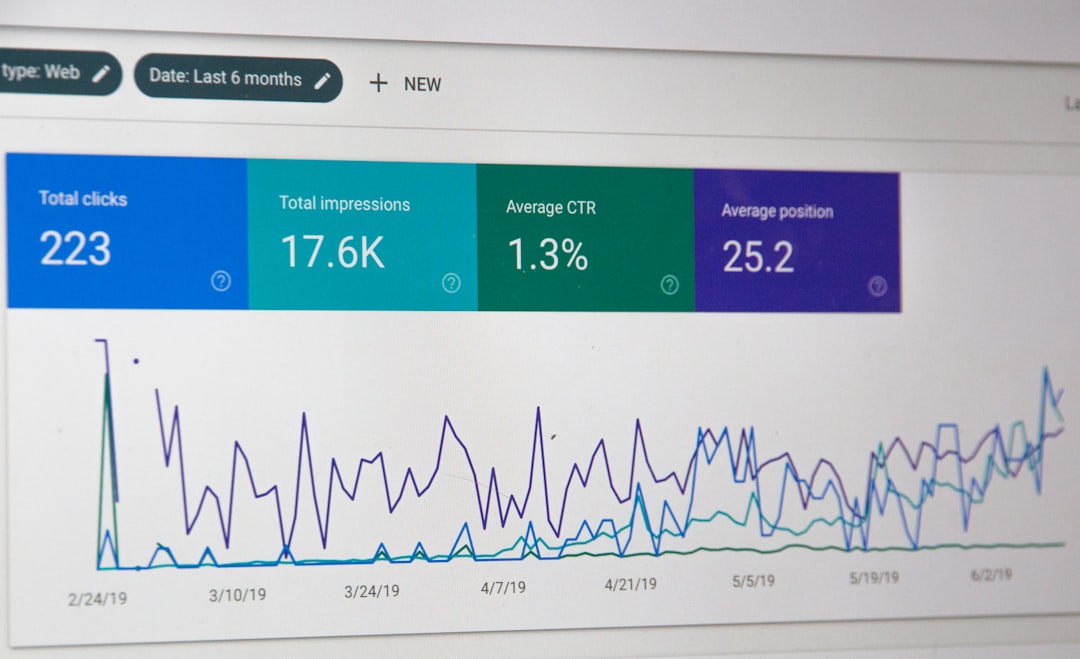
Programmatic SEO quality hinges on what happens before pages go live, not after. When you generate hundreds or thousands of pages from templates and structured data, every page needs to earn its place in Google’s index. Without pre-publish quality gates, most programmatic page sets end up thin, duplicative, or actively harmful to domain authority. The fix isn’t slowing down — it’s building a QA pipeline with clear signals that separate indexable pages from ones that should never see production.
This framework gives you seven specific signals to validate before any batch deployment. Think of them as a preflight checklist for scalable content quality.
Why Programmatic SEO Quality Fails at Scale
The promise of programmatic SEO is compelling: build one template, connect a dataset, and generate thousands of pages targeting long-tail queries. The reality? Most teams ship the pages and skip the quality control. They treat page generation as a one-step process when it’s actually two: generation and validation.
Without validation, you’re gambling. And the house always wins.
The Real Cost of Publishing Low-Value Pages
Let’s say you generate 30,000 city-level landing pages. Maybe 8,000 have rich, complete data. Another 12,000 are passable. The remaining 10,000 have sparse data, near-identical content to sibling pages, and satisfy no meaningful search intent.
Publishing all 30,000 creates a cascade of problems:
- Crawl budget waste. Google allocates finite crawling resources to your domain. When Googlebot spends time on 10,000 low-value pages, it crawls your high-value pages less frequently. For large sites, this delay compounds.
- Index bloat. Pages that get indexed but never rank don’t just sit harmlessly. They signal to Google’s quality systems that a significant portion of your site is low-value.
- Panda-style quality suppression. Google’s helpful content system evaluates site-wide quality. A large enough proportion of thin pages can drag down rankings across your entire domain — including pages that are genuinely excellent.
- Diluted topical authority. Thousands of shallow pages on related topics fragment your site’s authority instead of concentrating it.
The math is brutal. Publishing 30,000 pages when 10,000 are junk doesn’t give you 20,000 good pages. It gives you a domain-wide quality problem that suppresses all 30,000.
How Thin Content Detection Prevents Domain-Wide Damage
In the programmatic context, thin content isn’t just about word count. A 2,000-word page can be thin if 1,800 words are boilerplate template text repeated across every page in the set.
Thin content detection for programmatic SEO should evaluate three dimensions:
- Information gain — Does this page provide information a user can’t get from another page on the same site?
- Uniqueness ratio — What percentage of the page’s rendered content is actually unique to that specific page versus shared template text?
- User intent fulfillment — Does the page answer the query it targets, or does it just contain the right keywords in a template shell?
Automated thin content detection runs these checks across your entire page set before anything goes live. It’s the difference between proactive quality control and reactive damage control. If you’re building your first programmatic system, the Programmatic SEO Playbook 2026 covers the foundational strategy that makes this QA layer effective.
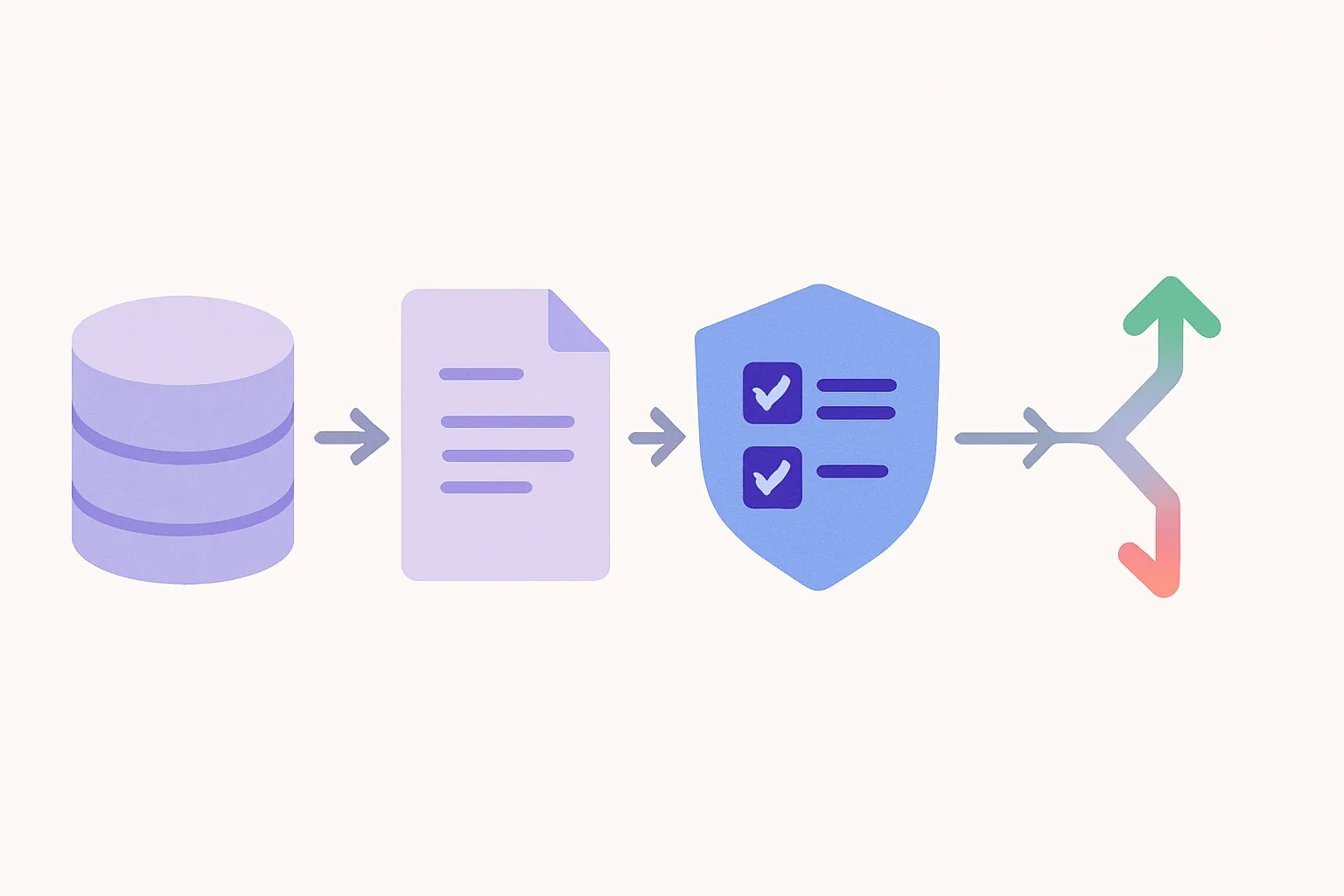
The 7 Pre-Launch QA Signals for Scalable Content Quality
Each signal below acts as a gate. A page that fails multiple signals gets blocked from indexing. A page that passes all seven ships with confidence.
Signal 1: Unique Information Ratio Per Page
This is the single most important programmatic SEO QA metric. Calculate it by comparing the rendered content of each page against the base template:
Unique content ratio = (unique content blocks ÷ total content blocks) × 100
Strip the template chrome — headers, footers, navigation, sidebars. Focus on the main content area. If a page’s main content is 60% boilerplate and 40% unique data-driven content, its unique information ratio is 40%.
Set your threshold based on page type. Data-heavy comparison pages might function well at 40% unique content. Informational pages targeting specific queries should hit 55-60% minimum.
Automate this by hashing content blocks and comparing them across the page set. Any block that appears on more than a set percentage of pages (say, 10%) gets classified as boilerplate.
Signal 2: Data Completeness and Null Value Handling
Programmatic pages are only as good as their data. When your dataset has gaps — missing fields, null values, empty arrays — the template generates pages with holes.
Check every generated page for:
- Missing primary data fields. If a product page has no price, no description, and no image, it shouldn’t exist.
- Placeholder text that slipped through. Strings like “TBD,” “N/A,” or “Lorem ipsum” in production pages are an instant fail.
- Data completeness score. Count the number of populated fields versus total available fields. A page with 4 out of 12 fields populated (33% completeness) probably isn’t worth indexing.
Build a rule: if data completeness drops below 60-70%, the page gets noindexed automatically. Pages below 40% shouldn’t be generated at all.
Signal 3: Search Intent Alignment Scoring
Generating a page doesn’t mean anyone will search for it. Cross-reference your generated pages against actual keyword data to confirm:
- Search demand exists. Does the query this page targets have measurable search volume? Even low-volume long-tail queries should show some evidence of demand — autocomplete suggestions, related searches, or question patterns.
- Format matches intent. If users searching “best coffee shops in [city]” expect a list with reviews, and your template generates a single-paragraph data card, you have an intent mismatch.
- SERP competition is appropriate. A programmatic page competing against comprehensive editorial content from major publications probably won’t rank. Target queries where your data-driven format is the better answer.
Score each page on a 1-5 intent alignment scale. Pages scoring 1-2 get flagged for review or noindexed.
Signal 4: Internal Duplicate and Near-Duplicate Detection
This is where programmatic pages most commonly fail. Two city pages with nearly identical data. Three product pages with the same specifications but different model numbers. Ten service-area pages where only the city name changes.
Use similarity scoring to catch these:
- Cosine similarity on TF-IDF vectors works well for text comparison at scale. Pages with similarity scores above 0.85 need review.
- Jaccard index on content shingles (n-gram sequences) catches near-duplicates that cosine similarity might miss.
- Exact-match block detection identifies when large content sections are copied verbatim between pages.
When you find near-duplicates, you have three options: consolidate them into a single stronger page, differentiate them with additional unique data, or canonicalize the weaker page to the stronger one.

Signal 5: Template Rendering and Structured Data Validation
A template that works perfectly with your sample data can break catastrophically with edge cases. Long product names that overflow containers. Special characters that break JSON-LD. Numeric fields that receive text strings.
Run automated rendering tests that:
- Render every page in a headless browser and check for visual breakage, overflow, or missing elements.
- Validate structured data using Google’s Rich Results Test API or equivalent validation against schema.org specs. Malformed schema won’t just fail to generate rich results — it can confuse search engines about the page’s content.
- Check HTML validity for issues like unclosed tags, malformed attributes, or missing alt text that accumulate across thousands of pages.
Test with your worst-case data, not your best-case data. The page generated from your cleanest data row will always look great. The one generated from your messiest data row is the one that’ll embarrass you.
Signal 6: Internal Linking Integrity and Orphan Page Prevention
A programmatic page that isn’t reachable through internal links is functionally invisible to search engines. Orphan pages waste your generation effort and fragment your site’s link equity.
Verify that:
- Every programmatic page receives at least one contextual internal link from a parent page, hub page, or sibling page.
- Link depth stays reasonable. Pages buried more than 4-5 clicks from the homepage get crawled less frequently. For large programmatic sets, build hub-and-spoke architectures that keep important pages within 3 clicks.
- No dead-end clusters exist. Groups of programmatic pages that link only to each other without connecting back to the broader site create crawl traps.
- Anchor text is descriptive. Programmatic internal links that all say “Learn more” waste an opportunity to signal topical relevance.
Map your internal link graph before launch. A crawl simulation will reveal orphans, dead ends, and pages with insufficient link equity.
Signal 7: Indexability Rules and Conditional Noindex Logic
Not every generated page deserves indexation. Build automated rules that apply noindex directives based on quality signal scores.
Example conditional logic:
| Condition | Action |
|---|---|
| Unique content ratio < 35% | Noindex |
| Data completeness < 50% | Noindex |
| Unique ratio < 45% AND completeness < 65% | Noindex |
| Near-duplicate score > 0.90 | Canonicalize to strongest variant |
| Search intent score = 1 | Noindex |
| Any 3+ signals in “fail” range | Noindex |
This isn’t about hiding bad pages. It’s about protecting your domain’s quality signals by only presenting your best work to search engines. Think of conditional noindex as a quality filter, not a band-aid.
Building a Programmatic SEO QA Pipeline
The seven signals above are only useful if they run automatically, consistently, and before pages reach production. Here’s how to wire them into a pipeline.
Automated Quality Scoring With Pass/Fail Thresholds
Assign each signal a weighted score, then calculate a composite quality score per page.
Tier system:
- Pass (score 80-100): Page ships to production, fully indexable.
- Review (score 55-79): Page is flagged for human inspection. A content editor checks whether the page adds value or needs enrichment.
- Fail (score 0-54): Page is blocked from production or deployed with noindex. No exceptions without manual override.
Weight the signals based on your specific page type. For data-heavy comparison pages, data completeness might carry 25% of the composite score. For informational pages, unique content ratio and intent alignment matter more.
Staging Environment Crawl Testing Before Production
Before any batch goes live, deploy to a staging environment and run a full crawl simulation. This catches issues that page-level checks miss:
- Canonical tag consistency across the page set
- Page load times under realistic conditions (programmatic pages with heavy data queries can be slow)
- Hreflang implementation if you’re generating multilingual variants
- Robots.txt and sitemap alignment — are your noindexed pages excluded from sitemaps?
- Redirect chains that might have been introduced by URL pattern changes
A staging crawl takes hours. Fixing a site-wide issue in production takes weeks.
Post-Launch Monitoring and Continuous Quality Audits
Programmatic SEO QA doesn’t end at launch. Set up ongoing monitoring for:
- Index coverage changes in Google Search Console. A sudden drop in indexed pages or spike in “Crawled - currently not indexed” signals a quality problem.
- Crawl anomalies. Pages that were indexed and then dropped likely failed a quality reevaluation.
- Performance decay. Pages that ranked initially but lost positions over 3-6 months may have been identified as thin by Google’s systems.
- Data source updates. When your underlying data changes, pages that previously passed quality checks might now have null values or stale information.
Automate re-evaluation. Run the same seven-signal check monthly or quarterly against your live page set. For a deeper dive into building sustainable programmatic systems, the Programmatic SEO Playbook 2026 outlines long-term maintenance strategies.

Common Programmatic SEO Quality Mistakes and How to Avoid Them
Mistaking Volume for Value in Page Generation
The most seductive mistake in programmatic SEO: “We have data for 50,000 variations, so let’s build 50,000 pages.”
Don’t.
If only 5,000 of those variations pass your quality thresholds, publish 5,000 pages. The other 45,000 aren’t lost opportunities — they’re liabilities. Google’s quality raters guidelines explicitly call out auto-generated pages that exist “without adding sufficient value.”
A focused set of 5,000 high-quality programmatic pages will outperform 50,000 mediocre ones every time. Quality compounds positively. Thin content compounds negatively.
Ignoring Entity and Topical Relevance in Templates
Swapping a city name into a template doesn’t create a page about that city. Swapping a product name into a template doesn’t demonstrate product expertise.
Effective programmatic templates build genuine topical depth:
- Entity relationships. A city page should connect to relevant neighborhoods, landmarks, demographics, and local context — not just repeat the city name in a generic paragraph.
- Contextual data. Raw data points become valuable when they’re contextualized. “Population: 45,000” is thin. “With a population of 45,000, [City] is the third-largest municipality in [County], growing 12% since 2020” is information gain.
- Supporting content. The best programmatic pages pull from multiple data sources to create a richer picture than any single data point provides.
If your template works equally well with any random entity swapped in, it’s not building topical relevance. It’s building keyword variations.
Frequently Asked Questions About Programmatic SEO Quality
What Is Programmatic SEO Quality and Why Does It Matter?
Programmatic SEO quality means each auto-generated page provides unique value, satisfies a real search intent, and meets Google’s helpful content standards. It matters because Google evaluates quality at the site level — a large set of low-quality programmatic pages can suppress rankings across your entire domain, including hand-crafted editorial content.
How Do You Detect Thin Content in Programmatic Pages?
Automated thin content detection combines three methods: unique content ratio analysis (comparing each page against the base template), information density scoring (measuring meaningful data points per page), and near-duplicate detection across the page set. Word count alone is insufficient — a long page filled with boilerplate is still thin.
How Many Programmatic Pages Should You Noindex?
There’s no universal number. It depends entirely on your data quality and template design. Noindexing 20-50% of a programmatic page set is normal and healthy. Some datasets produce 80% indexable pages; others produce 30%. The goal is indexing only pages that pass your quality thresholds, regardless of what percentage that represents.
Can Google Penalize Sites for Low-Quality Programmatic Content?
Yes. Google’s helpful content system evaluates site-wide quality. A large volume of thin programmatic pages generates a site-wide signal that can suppress rankings for all pages on the domain. This isn’t a manual penalty — it’s an algorithmic quality assessment that’s harder to recover from because it requires improving or removing the offending pages and waiting for reevaluation.
What Tools Help With Scalable Content Quality Checks?
Effective programmatic SEO QA typically combines custom scripts for similarity detection and unique content ratio calculation, headless browser tools for rendering validation, crawling software for site-wide link analysis and indexability checks, and monitoring dashboards that track index coverage and performance over time. Most teams build custom quality scoring pipelines because off-the-shelf tools aren’t designed for pre-publish batch validation.
How Often Should You Re-Audit Programmatic Pages?
Run quarterly full audits across your entire programmatic page set, supplemented by continuous monitoring of index coverage and crawl stats. Data sources change, search intent evolves, and pages that passed quality checks six months ago can degrade as underlying data becomes stale or competitors publish better content on the same topics.
Is It Better to Publish Fewer High-Quality Programmatic Pages?
Almost always yes. A smaller set of high-quality pages builds domain authority, earns consistent organic traffic, and signals quality to Google’s systems. A massive set of mediocre pages does the opposite. Start with your highest-quality data subset, validate it through the QA pipeline, and expand only when you can maintain quality thresholds.
Ship Quality, Not Just Quantity
Programmatic SEO is one of the most powerful growth strategies available — when every page earns its place in the index. The seven signals above give you a repeatable, automatable framework for ensuring that happens.
Build the QA pipeline before your next batch deployment. Run the checks. Noindex what doesn’t pass. Your domain authority will thank you, and so will the 5,000 pages that actually deserve to rank.