Semantic SEO: The Complete Knowledge Graph Approach to Entity-Based Search
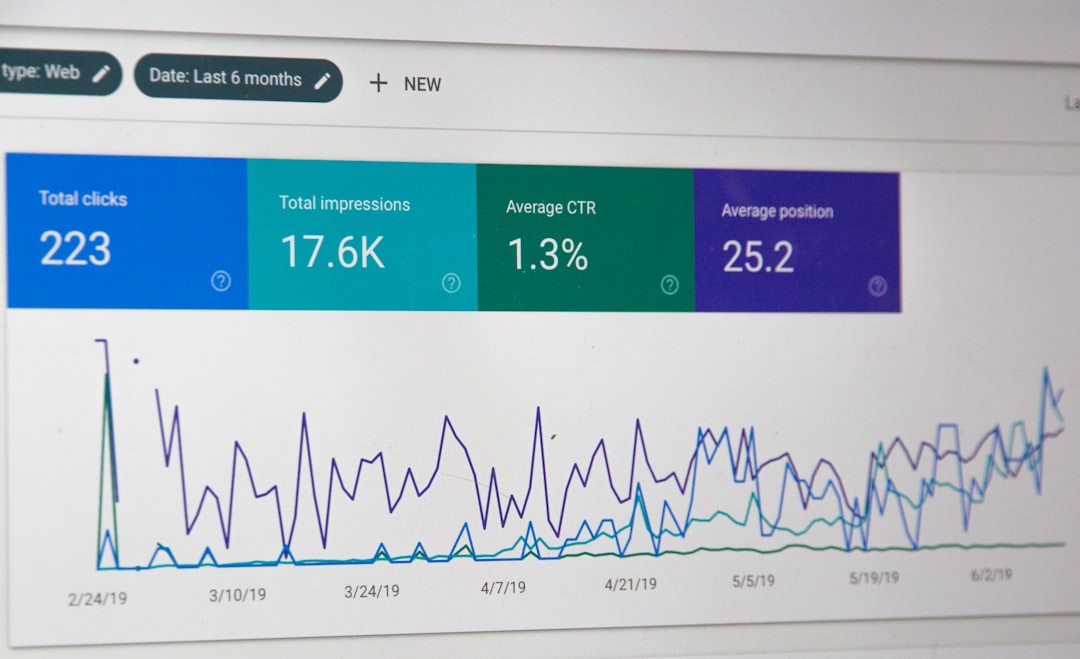
Meta description: Learn how semantic SEO and entity-based search work together. Master knowledge graph optimization, topical authority, and entity SEO with actionable strategies.
Semantic SEO is the practice of optimizing content around topics, entities, and meaning rather than individual keywords alone. It’s how you align your content with the way search engines actually understand language today — through relationships between concepts, not just matching strings of text. If you’re still building pages around single keywords and hoping density metrics carry you to page one, you’re optimizing for a search engine that no longer exists.
The shift happened gradually, then all at once. Google’s ability to interpret natural language, map entities to its Knowledge Graph, and understand the intent behind a query has fundamentally changed what “optimization” means. Structured data, natural language processing, and entity recognition now drive how search engines decide which content best answers a question. The old playbook still has some useful pages. But the game changed.
What Is Semantic SEO and Why Does It Matter Now?
At its core, semantic SEO means creating content that demonstrates deep understanding of a topic — not just surface-level keyword usage. You’re writing for a search engine that reads like a human, connects ideas like a researcher, and evaluates expertise like a peer reviewer.
Google doesn’t just scan for the word “mortgage.” It understands that mortgages involve interest rates, amortization schedules, lenders, credit scores, down payments, and closing costs. When your content addresses the full semantic field around a topic, you signal that you actually know what you’re talking about. That signal matters more every year.
From Keywords to Concepts: How Search Engines Evolved
The evolution is worth understanding because it explains why semantic strategies work.
2013 — Hummingbird: Google rebuilt its core algorithm to process entire queries as meaningful phrases instead of breaking them into individual words. A search for “best place to eat pizza near the office” stopped returning results optimized for “best” + “pizza” + “office” and started returning actual nearby pizza restaurants.
2015 — RankBrain: Machine learning entered the ranking process. Google could now interpret queries it had never seen before by finding patterns in how similar queries were answered. According to Google, RankBrain quickly became one of the top three ranking signals.
2019 — BERT: Bidirectional Encoder Representations from Transformers (yes, the name is a mouthful) let Google understand the nuance of prepositions and context words. The word “to” in “flights from New York to London” finally carried weight. Google estimated BERT affected 10% of all English-language queries at launch.
2021–present — MUM and beyond: Multitask Unified Model processes information across languages and formats. The direction is clear: search engines are becoming knowledge engines.
Each update moved Google closer to understanding meaning. That trajectory isn’t reversing.
The Difference Between Traditional SEO and Semantic Search Optimization
Here’s where confusion sets in. Semantic SEO doesn’t replace keyword research. It builds on top of it.
| Dimension | Traditional SEO | Semantic SEO |
|---|---|---|
| Primary focus | Keyword density, exact match | Topical depth, entity coverage |
| Link strategy | Exact-match anchors | Contextual, entity-relevant anchors |
| Content structure | One keyword per page | Topic clusters with entity relationships |
| Success metric | Rank for target keyword | Rank for topic portfolio, entity recognition |
| On-page signals | Title tags, H1 optimization | Schema markup, NLP-aligned content, entity attributes |
Traditional SEO asks: “Does this page contain the keyword?” Semantic SEO asks: “Does this page demonstrate comprehensive knowledge of the topic and its related entities?”
Both questions matter. But only one of them scales.
Understanding Entities, Topical Authority, and the Knowledge Graph
Three concepts form the backbone of any entity SEO strategy. They’re distinct but deeply interconnected.
What Is a Topical Entity and How Does Google Identify One?
A topical entity is a distinct, well-defined thing — a person, place, organization, concept, event, or product — that can be unambiguously identified. “Apple” is an entity. So is “Apple Inc.” So is “apple pie.” Google’s job is figuring out which one you mean.
Disambiguation happens through context and co-occurrence. When “Apple” appears alongside “iPhone,” “Tim Cook,” and “market cap,” Google maps it to the technology company. When it appears with “cinnamon,” “crust,” and “baking,” it maps to the fruit (or the dessert).
Google relies on structured databases — primarily Wikidata and Wikipedia — as canonical sources for entity identification. Each entity in Wikidata gets a unique identifier (a QID). Barack Obama is Q76. The Eiffel Tower is Q243. These identifiers let machines talk about entities without ambiguity.
Your brand, your products, your key people — they’re all potential entities. The question is whether Google recognizes them as such.
How the Knowledge Graph Connects Information
Google’s Knowledge Graph is a massive database of entities and the relationships between them. Launched in 2012, it contains billions of facts about hundreds of billions of entities. Think of it as Google’s internal model of the world.
When you search for a well-known person and see a panel on the right side of the results — with their photo, birth date, occupation, and related people — that’s a Knowledge Panel, which is the visible output of Knowledge Graph data. The graph itself is the underlying database. The panel is just one way that data surfaces.
Being recognized as an entity in the Knowledge Graph influences visibility in several ways:
- Knowledge Panels give you prominent SERP real estate
- Entity associations help Google understand what your content is about
- Disambiguation ensures your brand isn’t confused with something else
- Rich results become more likely when Google trusts your entity identity
Knowledge graph optimization isn’t just about vanity. It’s about making your brand machine-readable.
Building Topical Authority Through Entity Coverage
Topical authority is what happens when you demonstrate comprehensive expertise across an entire subject area — not just one page, but across a body of interlinked content.
Say you run a site about coffee. One article on “how to brew pour-over coffee” doesn’t make you a topical authority. But fifty deeply interlinked articles covering brewing methods, bean origins, roast profiles, grinder types, water chemistry, latte art, espresso machine maintenance, and coffee history? That starts to look like expertise.
The key is entity coverage. For any given topic, there’s a set of entities that a genuinely knowledgeable source would naturally discuss. Google can measure how well your content covers that entity map.
Content hubs — a pillar page supported by cluster pages, all connected through internal links — are the structural expression of this strategy. Each cluster page targets a related entity or subtopic. The internal links between them mirror the relationships Google expects to see. If you’re exploring how to scale content creation systematically, this hub-and-spoke architecture becomes even more critical.
Depth beats breadth. Every time.
Knowledge Graph Optimization: How to Get Your Brand Recognized as an Entity
Theory is useful. Execution pays the bills. Here’s how to actually strengthen your entity presence.
Structured Data Markup and Schema for Entity Signals
Schema markup is how you speak to search engines in their native language. JSON-LD structured data lets you explicitly declare: “This is an organization. Here’s its name, logo, founder, address, and social profiles.”
Priority schema types for entity SEO:
- Organization — name, logo, URL, founding date, founders, sameAs links
- Person — for key individuals, especially thought leaders or founders
- Product — for e-commerce and SaaS entities
- Article — authorship, publication date, publisher entity
- FAQPage — for FAQ sections (like the one below)
- SameAs — critical property that links your entity to its profiles across authoritative platforms
The sameAs property deserves special attention. It’s how you tell Google: “This Organization entity on my website is the same entity as this Wikidata entry, this LinkedIn page, this Twitter profile, and this Crunchbase listing.” That cross-referencing accelerates entity reconciliation.
Don’t just add schema and forget it. Validate it with Google’s Rich Results Test, and make sure the data stays accurate as your business evolves.
Establishing Entity Identity Across Authoritative Sources
Google doesn’t trust a single source for entity information. It triangulates across the web. Consistent, corroborating information across multiple authoritative platforms strengthens your entity identity.
The entity reconciliation checklist:
- Google Business Profile — fully completed, verified, and regularly updated
- Wikipedia / Wikidata — if your entity meets notability requirements, a Wikipedia article and corresponding Wikidata entry are powerful signals (don’t create these yourself; engage with the community ethically)
- Social profiles — consistent naming, bios, and profile images across LinkedIn, Twitter/X, and relevant platforms
- Industry directories — Crunchbase, industry-specific databases, professional associations
- Press mentions — authoritative publications that mention your entity with consistent attributes
The concept is entity reconciliation: Google’s process of determining that mentions across different sources refer to the same real-world entity. Conflicting information — different addresses, inconsistent names, contradictory founding dates — creates friction in this process.
Consistency isn’t glamorous. It’s essential.
Earning Knowledge Panel Presence
Knowledge Panels aren’t something you can buy or directly request. But you can systematically increase the likelihood of triggering one.
Step-by-step approach:
- Establish an entity home page — a single, authoritative page on your website that serves as the canonical source for your entity’s attributes
- Implement comprehensive Organization or Person schema on that page
- Build corroborating sources — the authoritative mentions discussed above
- Get a Wikidata entry — this is often the tipping point for Knowledge Panel generation
- Claim and verify — once a panel appears, claim it through Google’s verification process to suggest edits and maintain accuracy
Patience matters here. Some entities trigger panels within weeks of establishing strong signals. Others take months. The strength and consistency of your entity signals across the web determine the timeline.
Practical Semantic SEO Strategy: Content Creation and On-Page Techniques
Let’s get into the daily work.
Mapping Entity Relationships Before You Write
Before you write a single word, you need to know which entities belong in your content. This isn’t about keyword lists — it’s about understanding the entity map for your topic.
Research workflow:
- Analyze the SERP — look at the top-ranking pages for your target query. What entities do they consistently mention? What subtopics do they cover?
- Use NLP tools — run top-ranking content through Google’s Natural Language API or similar entity extraction tools. Note which entities are identified, their salience scores, and their categories.
- Check “People Also Ask” and related searches — these reveal the questions and subtopics Google associates with your primary topic
- Map entity relationships — create a simple diagram showing how entities relate to each other within your topic
This upfront research typically takes 20-30 minutes. It saves hours of revision later and dramatically improves your content’s topical coverage from the first draft.
Writing Content That Satisfies Semantic Search Intent
With your entity map in hand, writing becomes more purposeful.
The goal isn’t to mention every entity in a forced, unnatural way. It’s to write content so thorough that those entities appear organically. When you truly explain a topic, the relevant entities show up because they have to.
Practical guidelines:
- Answer related questions within the content — don’t wait for someone to click away to “People Also Ask”
- Use natural synonyms and co-occurring terms — not as a keyword-stuffing tactic, but because natural language naturally varies
- Provide contextual depth — don’t just mention an entity; explain its relevance to the topic
- Structure with clear headings — help both readers and search engines understand the content’s organization
- Write at the level your audience expects — expertise signals come from demonstrating knowledge, not from using jargon unnecessarily
One useful test: after writing, run your content through an NLP entity extraction tool. Compare the entities detected against those found in top-ranking competitor content. Gaps reveal opportunities.
If you’re new to thinking about content this way, our introductory guide covers foundational concepts that complement the entity-focused approach.
Internal Linking as an Entity Relationship Signal
Internal links do more than pass PageRank. They communicate topical relationships.
When you link from your article about “espresso brewing” to your article about “burr grinders” using contextual anchor text, you’re telling Google these entities are related — and that your site covers both in depth. That mirrors how entities connect in the Knowledge Graph itself.
Best practices:
- Use descriptive, contextual anchor text — “burr grinder selection guide” beats “click here”
- Link between related entities within your topic cluster — every cluster page should link to the pillar and to sibling pages
- Don’t over-link — link where it genuinely helps the reader find related information
- Audit internal links quarterly — as your content library grows, older pages miss opportunities to link to newer, related content
The hub-and-spoke model isn’t just an organizational pattern. It’s a semantic signal. Your linking structure should reflect the entity relationships your content describes.
Measuring Semantic SEO Performance
Rankings for a single keyword are a narrow lens. Semantic SEO performance requires broader measurement.
Key metrics to track:
- Topical keyword portfolio growth — are you ranking for more queries within your topic cluster over time? Google Search Console’s performance report, filtered by page or topic, reveals this.
- Entity recognition — run your content through NLP tools periodically. Are the right entities being detected? Is salience improving?
- Knowledge Panel triggers — monitor whether your brand or key people trigger Knowledge Panels
- Featured snippet acquisition — semantic content tends to earn more featured snippets because it directly answers questions with context
- Search Console entity queries — look for branded and entity-related queries appearing in your impressions data
Track these monthly. Topical authority compounds over time, so short-term measurement can be misleading. The trend line over 6-12 months tells the real story.
Common Mistakes That Undermine Entity SEO Efforts
Knowing what to do is half the battle. Knowing what to avoid is the other half.
Treating Semantic SEO as a Keyword Synonym Game
This is the most common misunderstanding. Sprinkling synonyms throughout your content — “car,” “automobile,” “vehicle,” “ride” — isn’t semantic optimization. It’s just synonym stuffing.
True semantic SEO requires covering the entities, subtopics, and relationships that constitute genuine topical depth. Swapping words doesn’t add meaning. Addressing the full context of a topic does.
Ignoring Entity Consistency Across the Web
Your website says you were founded in 2018. Your LinkedIn says 2019. Your Crunchbase profile lists a different CEO than your About page. These inconsistencies aren’t minor — they directly interfere with Google’s ability to reconcile your entity across sources.
Audit your entity information across every platform where it appears. Fix discrepancies. Then maintain that consistency as information changes. This is unglamorous, detail-oriented work. It’s also one of the highest-impact things you can do for knowledge graph optimization.
Publishing Shallow Content Across Too Many Topics
A site with 200 thin articles across 40 different topics builds authority in none of them. Compare that to a site with 50 deep articles across 3 related topics. The focused site wins on topical authority every time.
Pick your lanes. Go deep. Resist the temptation to chase every keyword opportunity that surfaces in your research. A systematic approach to content production works best when it’s anchored to a clear topical strategy, not scattered across unrelated subjects.
Frequently Asked Questions About Semantic SEO and Entity Strategy
Is Semantic SEO the Same as Entity SEO?
Not exactly. Entity SEO is a subset of semantic SEO that focuses specifically on establishing and optimizing entity signals — structured data, Knowledge Graph presence, and entity reconciliation. Semantic SEO is the broader approach encompassing topical authority, content depth, NLP alignment, and entity strategy together.
Do I Still Need Keywords if I Focus on Entities?
Yes. Keywords are the language users type into search boxes. Entities are the concepts behind those words. You need keywords to match user queries and entities to demonstrate topical understanding. They work together, not as alternatives.
How Long Does It Take to Build Topical Authority?
It depends on niche competitiveness and how consistently you publish. Most sites see meaningful topical authority signals within 3-12 months of consistent, interlinked content publishing around a core topic. Less competitive niches can see results faster.
What Schema Types Are Most Important for Knowledge Graph Optimization?
Organization, Person, Product, Article, FAQPage, and the sameAs property are the highest-priority types. Which ones matter most depends on your entity type — a personal brand prioritizes Person schema, while an e-commerce site focuses on Organization and Product.
Can Small Websites Compete Using Semantic SEO?
Absolutely. Focused topical authority in a narrow niche can outperform large sites with shallow coverage across many topics. Depth and specificity are the small site’s advantage. You don’t need to cover everything — you need to cover your topic better than anyone.
How Does Google’s Knowledge Graph Differ From Knowledge Panels?
The Knowledge Graph is the underlying database of entities and their relationships — billions of facts stored internally by Google. Knowledge Panels are the visible SERP feature that displays a subset of that information to users. The graph is the database; the panel is the interface.
What Tools Help With Topical Entity Research?
Google’s Natural Language API extracts entities from text and assigns salience scores. SERP analysis tools help identify which entities appear consistently in top-ranking content. Knowledge graph explorers let you browse entity relationships in Wikidata. The methodology matters more than the specific tool — extract entities from top content, identify gaps in yours, and fill them with genuine depth.
Next Steps: Building Your Entity-First Search Strategy
The shift from keyword-first to entity-first SEO isn’t theoretical. It’s happening in every SERP, every day.
Your immediate action items:
- Audit your entity presence — Google your brand name. Do you have a Knowledge Panel? Is the information accurate? Check your consistency across platforms.
- Map your topical clusters — identify 2-3 core topics where you want to build authority. List the entities and subtopics each cluster should cover.
- Implement structured data — start with Organization or Person schema on your homepage and About page. Add Article schema to your blog posts. Include
sameAsproperties linking to your authoritative profiles. - Create depth-first content — for each topic cluster, build a pillar page and supporting cluster pages. Interlink them with contextual anchor text.
- Measure and iterate — track your topical keyword portfolio, entity recognition, and Knowledge Panel presence monthly.
Semantic SEO isn’t a one-time optimization. It’s an ongoing practice of building and reinforcing your entity identity, deepening your topical coverage, and aligning your content with how search engines actually understand the world. Start with one topic cluster. Do it well. Then expand.
The sites that treat their content as a knowledge base — not a keyword farm — are the ones that compound their visibility over time. That’s the entity-first advantage.