SEO Attribution Models: When First-Touch Lies to You
The Short Answer: Your SEO Attribution Is Probably Wrong
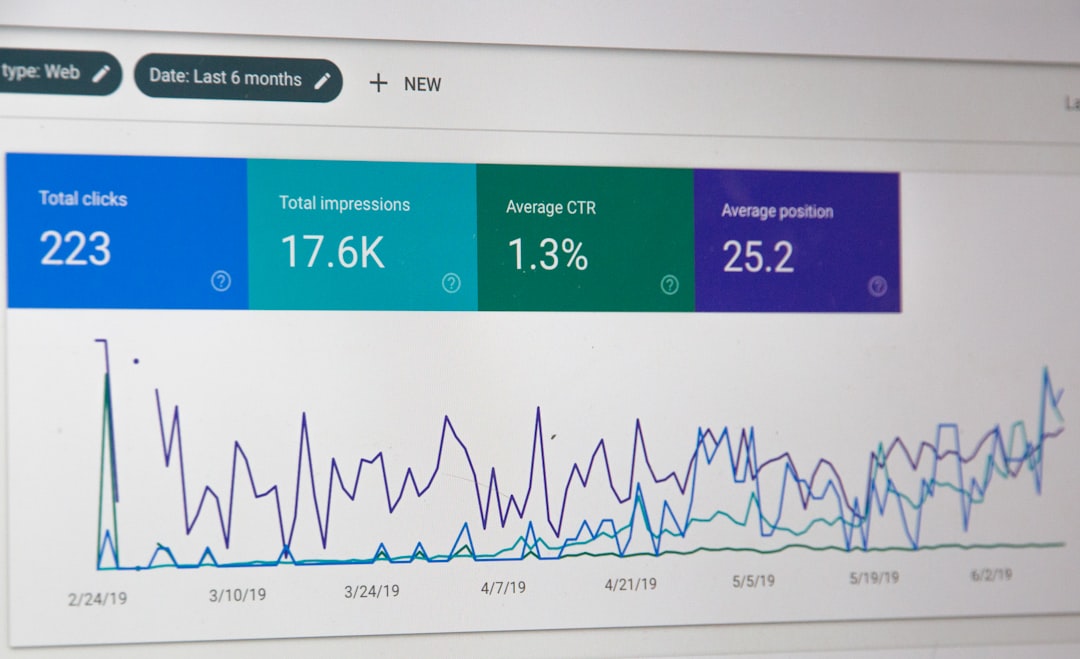
Most marketing teams default to first-touch or last-touch seo attribution, and both systematically distort organic search’s contribution to revenue. First-touch over-credits SEO when a blog post happens to be someone’s entry point. Last-touch erases it entirely when a branded paid ad closes the deal. The core problem is simple: SEO rarely operates in isolation. A buyer reads your content, leaves, clicks a retargeting ad, opens an email, and converts. Single-touch models pretend only one of those moments mattered.
The result? Teams either over-invest in top-of-funnel content that doesn’t actually drive conversions, or they gut content programs because the spreadsheet says organic “isn’t performing.” Both outcomes stem from the same flaw — treating a multi-step journey like a single event.
Getting organic attribution right doesn’t require perfect data. It requires moving past the comfortable lie that one touchpoint tells the whole story.
How First-Touch Organic Attribution Distorts Reality
First-touch attribution works like this: the very first interaction a user has with your brand gets 100% of the conversion credit. If that first interaction was an organic click, SEO gets the win. Everything that happened afterward — the demo request driven by email, the retargeting ad that brought them back, the sales call — disappears from the model.
This sounds reasonable until you trace an actual buyer journey.
Consider a B2B software buyer. She searches “how to automate invoice reconciliation,” lands on your blog post, spends three minutes reading, and leaves. Two weeks later, a LinkedIn ad catches her eye. She clicks, browses your product page, and signs up for a webinar. After the webinar, she gets a nurture email sequence. On day 34, she clicks a branded Google ad and requests a demo. The deal closes at $48,000 ARR.
SEO first-touch attribution gives organic search 100% of that $48,000. The LinkedIn ad, the webinar, the email sequence, the branded paid click — none of it registers. That’s not attribution. That’s fiction.
Now reverse the scenario. A different buyer first sees your brand through a conference sponsorship. She later searches your product category, reads three of your comparison guides via organic search, and finally converts through a direct visit. First-touch gives the conference all the credit. SEO’s three critical touchpoints vanish.
Same model, opposite distortion. That’s the fundamental problem with seo first-touch logic.
The Informational Query Trap
Top-of-funnel blog posts are especially prone to first-touch inflation. A user searches “what is revenue operations,” reads your 2,000-word explainer, and bounces. Three weeks later — after seeing your brand in a podcast ad and getting retargeted on social — she returns via a branded paid search click and starts a trial.
First-touch gives SEO 100% of that conversion. But did the blog post really cause the sale? It introduced the brand, sure. That matters. But awarding it full credit ignores every subsequent touchpoint that actually moved the buyer from awareness to action.
This is the informational query trap. Content targeting high-volume, top-of-funnel keywords naturally captures a lot of first touches. Under first-touch attribution, these pages look like revenue machines. In reality, many of them are doing awareness work — valuable, but not the whole story.
Teams that rely on first-touch data to prioritize their content calendar end up doubling down on “what is X” articles while starving the mid-funnel comparison and product pages that actually assist conversions. If you’re scaling content production using a programmatic SEO playbook 2026 approach, this distortion gets amplified across hundreds or thousands of pages.
When Last-Touch Erases SEO Entirely
The flip side is just as damaging. Last-touch attribution gives all conversion credit to the final interaction before a user converts. For most businesses, that’s a branded search click, a direct visit, or an email.
Organic search almost never gets last-touch credit for high-value conversions. Buyers don’t typically convert on their first visit to a blog post. They convert after multiple touchpoints — and the last one is rarely an unbranded organic click.
The consequence: leadership reviews a last-touch report, sees that organic search drives a small fraction of attributed revenue, and questions why the company employs four content writers. Content budgets get cut. The blog that was quietly building pipeline through awareness and trust gets deprioritized.
According to Google’s own research, the average B2B buyer engages with 3–7 touchpoints before converting. Ignoring all but the last one isn’t conservative — it’s reckless.
Multi-Touch SEO Attribution Models That Actually Work
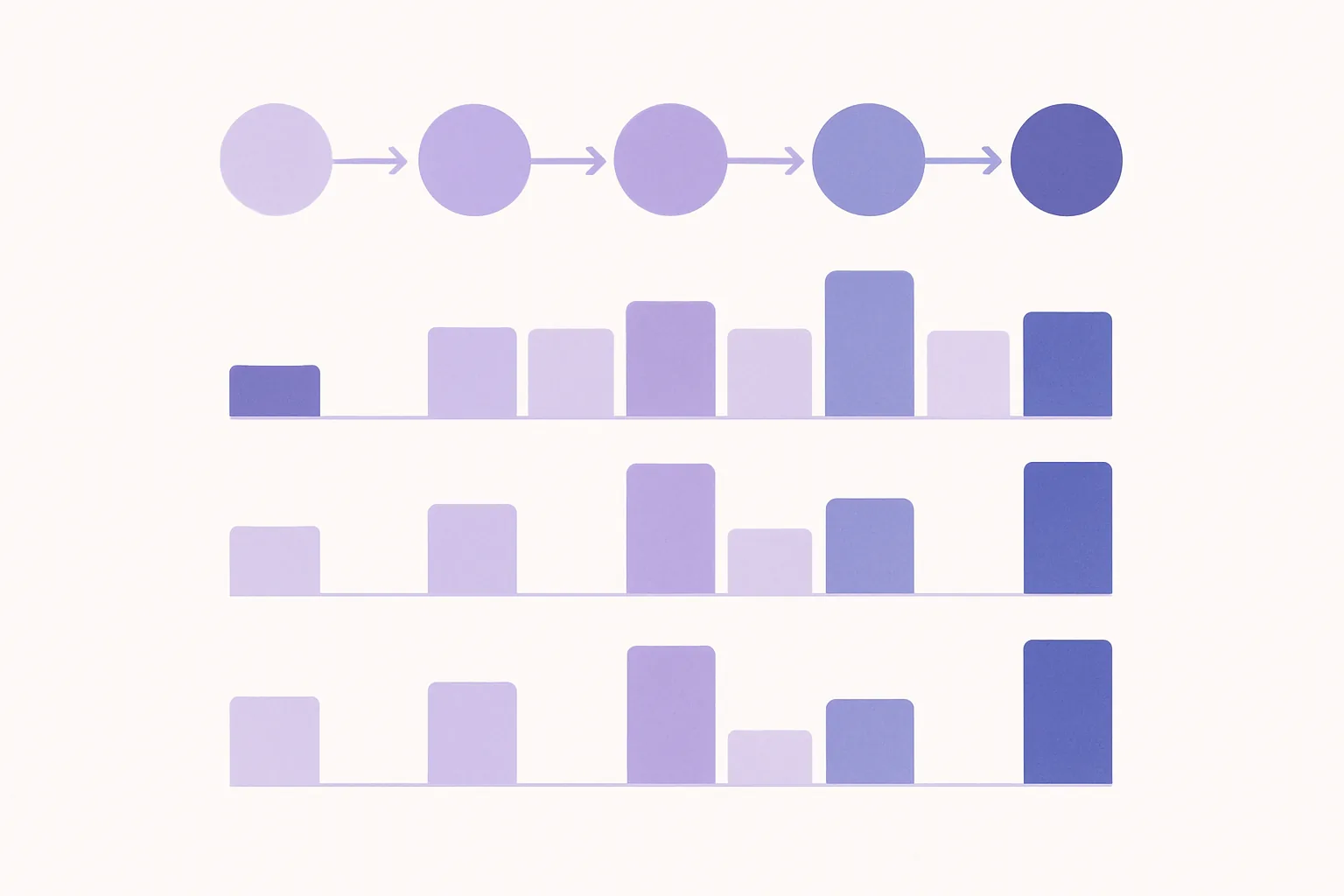
Multi-touch SEO models distribute credit across multiple interactions. None of them are perfect. The goal isn’t precision — it’s directional accuracy. You want to understand whether organic search is playing a meaningful role in your pipeline, and where in the journey it contributes most.
Here’s how the main models compare:
| Model | Credit Distribution | Best For | Limitation |
|---|---|---|---|
| Linear | Equal across all touches | Long consideration cycles | Over-credits low-impact touches |
| Time-Decay | More credit to recent touches | Shorter sales cycles | Under-credits awareness |
| Position-Based (U-Shaped) | 40% first, 40% last, 20% middle | Balanced view of SEO’s role | Arbitrary weighting |
| Data-Driven | Algorithmic, based on actual paths | High-volume sites | Requires significant data |
Linear vs. Time-Decay: Choosing Your Starting Point
Linear attribution splits credit equally across every touchpoint. If a buyer touched your brand five times before converting — organic blog visit, social click, email open, paid ad click, direct visit — each gets 20%.
This works well when you genuinely don’t know which touchpoints matter most, or when your sales cycle is long enough that early touches carry real influence. Enterprise B2B with 90+ day cycles often fits here.
Time-decay gives progressively more credit to touchpoints closer to conversion. That organic blog visit from 60 days ago gets a sliver. The email click from yesterday gets the lion’s share.
Time-decay suits shorter cycles — e-commerce, SaaS free trials, anything where the decision window is compact. It acknowledges that recent interactions tend to have more direct influence on the purchase decision.
The catch: time-decay systematically undervalues SEO’s awareness contribution. If organic search consistently shows up early in the journey, time-decay will always minimize its credit. That’s not wrong, exactly — but it can lead to the same underinvestment problem as last-touch.
Position-Based Attribution for Organic Search
The position-based model (often called U-shaped) assigns 40% of credit to the first touchpoint, 40% to the last, and splits the remaining 20% across everything in between.
For organic attribution, this model often hits a useful middle ground. It respects SEO’s common role as either the introducer (first touch) or the closer (last touch) without pretending the middle of the journey doesn’t exist.
If organic search frequently appears as the first interaction in your conversion paths — which it does for most content-driven businesses — position-based attribution gives it meaningful credit (40%) without the absurdity of 100%. And when organic shows up in the middle, it still gets a share.
For teams just moving beyond single-touch models, position-based is often the strongest default. It’s simple enough to explain to stakeholders and nuanced enough to reveal patterns that single-touch hides.
Data-Driven Models: When You Have Enough Volume
Algorithmic or data-driven attribution uses machine learning to analyze actual conversion paths and assign credit based on statistical impact. GA4 offers a data-driven model as its default, though the quality of its output depends heavily on your data volume.
Google recommends a minimum of 400 conversions per conversion action over 30 days for data-driven attribution to work reliably. Many B2B sites don’t hit that threshold. E-commerce sites with thousands of monthly transactions are better candidates.
Be honest about where your site falls. If you’re getting 50 demo requests a month, data-driven attribution will be noisy and unreliable. Start with position-based, build up your tracking infrastructure, and graduate to data-driven when your volume supports it.
Practical Steps to Fix Your Organic Attribution Today
Theory is useful. Implementation is what changes budgets. Here’s what you can do now.
Audit Your Current Attribution Setup in GA4
GA4 defaults to data-driven attribution for most reports, which is a change from Universal Analytics’ last-click default. But many teams haven’t verified what their setup is actually doing.
This week:
- Go to Admin → Attribution Settings in GA4. Check which model is selected and what the lookback window is set to (default is 30 days for acquisition, 90 for other conversions).
- Open Advertising → Conversion Paths. Filter by “Organic Search” to see where organic appears in the journey — first, middle, or last.
- Check Advertising → Model Comparison. Compare last-click vs. data-driven to see how credit shifts for organic. If the gap is large, your current reporting is likely misleading someone.
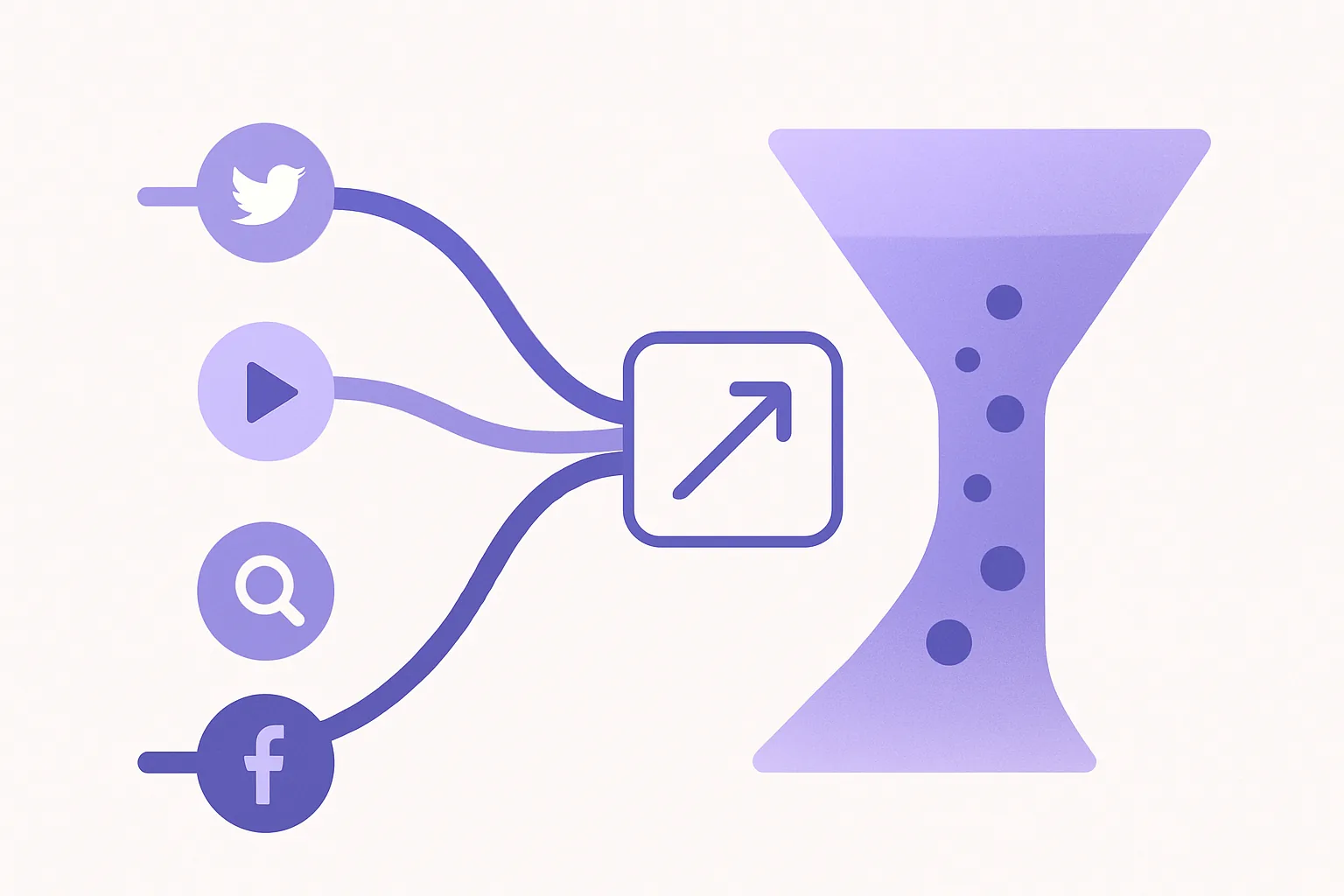
If you see organic search appearing frequently in early and middle positions but rarely as the last touchpoint, you’ve found the gap that single-touch reporting has been hiding.
Build a Blended Attribution Dashboard
Don’t pick one model. Show several side by side.
A blended dashboard exposes the range of SEO’s contribution rather than forcing a single number. When a VP asks “how much revenue does SEO drive?” the honest answer is “between $X and $Y depending on how we count” — and showing that range builds more trust than false precision.
Key metrics to include:
- Assisted conversion value — total revenue from paths where organic appeared but wasn’t the last click
- Path position frequency — how often organic shows up as first, middle, or last touch
- Time-lag distribution — how many days between first organic touch and conversion
- Model comparison — revenue attributed to organic under last-click, position-based, and data-driven models
For teams integrating offline conversions — common in B2B — connect your CRM data to GA4 or use a dedicated attribution tool. The gap between online touchpoints and closed-won deals is where most multi-touch SEO data goes to die. If you’re collecting user data across platforms, make sure your tracking respects consent requirements while still capturing the journey.
Communicating SEO Value Beyond Last Click
The best attribution data in the world is useless if you can’t communicate it. Here’s what works with executives who are used to single-touch reports:
Frame SEO as infrastructure, not a campaign. Paid ads are a faucet — turn them off and leads stop. SEO is more like plumbing. It doesn’t show up in the “last-click” report for the same reason plumbing doesn’t show up in your rent invoice, but try running the building without it.
Lead with assisted conversion data. “Organic search assisted $2.3M in pipeline last quarter” is a concrete, defensible number that doesn’t require anyone to understand attribution theory.
Show the what-if. Pull up conversion paths that included organic touchpoints. Then ask: “What happens to these 847 conversions if we cut the content program?” Nobody can answer that question precisely, but the exercise makes the risk tangible.
Use ranges, not points. “Organic drives between $1.1M and $2.3M in quarterly revenue depending on the attribution model” is more credible than “$1.7M” with false precision.
If you’re just getting started with content-driven SEO, building this reporting foundation early will save you painful budget conversations later.
Frequently Asked Questions About SEO Attribution
What Is SEO Attribution?
SEO attribution is the process of assigning conversion credit to organic search touchpoints across the customer journey. Unlike general marketing attribution — which covers all channels — SEO attribution specifically examines how organic search interactions contribute to leads, sales, and revenue. It answers the question: “What role did organic search play in this conversion?”
Why Does First-Touch Attribution Overvalue SEO?
Informational queries (“what is X,” “how to Y”) often initiate buyer journeys but don’t directly cause conversions. Because organic search captures so many of these early interactions, first-touch attribution inflates SEO’s perceived revenue impact. The user who read your blog post 45 days ago and converted through an email click didn’t convert because of the blog post — but first-touch says they did.
What Is the Best Attribution Model for Organic Search?
There’s no single best model. Position-based (U-shaped) attribution is a strong default for most teams because it credits both the introduction and closing touchpoints — two positions where organic search commonly appears. Data-driven attribution is ideal if you have enough conversion volume (400+ per month per action). The smartest approach is comparing multiple models rather than committing to one.
How Do I Track Multi-Touch SEO Conversions in GA4?
Use the Conversion Paths report under Advertising to see organic search’s role across the journey. The Model Comparison report lets you compare credit under different models. Note that GA4 defaults to data-driven attribution, a significant shift from Universal Analytics’ last-click default. If you migrated without adjusting settings, your attribution logic changed without anyone noticing.
Does Organic Attribution Work for E-Commerce and B2B Differently?
Yes, significantly. E-commerce typically has shorter conversion paths, higher data volume, and transactions that happen entirely online — making data-driven models more viable. B2B involves longer sales cycles (often 30–90+ days), fewer conversions, offline touchpoints like sales calls, and CRM integration requirements. B2B teams usually need to start with position-based or linear models and invest in CRM-to-analytics data pipelines.
How Do I Prove SEO ROI Without Last-Click Data?
Three approaches work well together:
- Assisted conversion value from GA4 shows the revenue organic search influenced even when it wasn’t the final click
- Incrementality testing (pausing SEO-driven content for specific segments and measuring the impact) provides causal evidence
- Blended dashboards showing the range of SEO’s contribution across models let stakeholders see the full picture
Can I Use Attribution Data to Prioritize SEO Content?
Absolutely. Pages that frequently appear as assist touchpoints but rarely as last-click deserve continued investment — they’re doing critical mid-funnel work. Pages with high first-touch volume but no assists may need better internal linking, stronger CTAs, or improved content that guides readers deeper into the funnel. Attribution data turns content strategy from guesswork into evidence-based planning.
Stop Letting a Single Touchpoint Tell the Whole Story
Attribution isn’t about finding the “right” model. It’s about abandoning the delusion that a single touchpoint explains a complex buying decision.
Start this week. Pull up your GA4 conversion paths. Filter for organic search. See where it actually shows up. Then build a side-by-side comparison of at least two models — last-click and position-based is a good starting pair.
The gap between those two numbers is the story your current reporting isn’t telling. And that gap is where SEO budgets get defended, content programs get funded, and organic search finally gets credited for the work it’s actually doing.
Better seo attribution doesn’t just make reports more accurate. It leads to smarter budget allocation, stronger content programs, and teams that invest in what’s actually driving growth — not just what happened to be the last click.