The 14-Day SEO Client Onboarding That Sets Up Wins

Most SEO client relationships don’t fall apart at month six because the strategy failed. They fall apart because the first two weeks were chaos. A structured SEO client onboarding process — completed in 14 days — aligns expectations, builds trust, and creates the foundation for measurable results before you’ve even touched a meta tag. According to HubSpot research, companies with a formalized onboarding process see up to 50% greater new-client retention. That tracks with what most agency operators already know in their gut: a strong start is the whole game.
This guide walks through the exact 14-day framework, day by day, including the onboarding checklist, templates, and common mistakes that quietly kill client relationships.
Why the First 14 Days Make or Break an SEO Engagement
The opening stretch of any agency relationship is where the client decides — consciously or not — whether they trust you. That decision gets made fast. And once trust erodes, you spend the rest of the engagement trying to earn it back instead of doing actual SEO work.
The Real Cost of a Sloppy Onboarding Process
When onboarding is ad hoc, everything downstream suffers:
- Scope creep starts immediately. Without documented goals and KPIs, clients invent new priorities every week.
- Trust erosion kicks in when the client doesn’t hear from you for days after signing. Silence feels like neglect.
- Delayed results compound. Every day you don’t have Google Search Console access is a day you’re flying blind.
- Churn accelerates. A study from Wyzowl found that 86% of customers say they’d be more likely to stay loyal to a business that invests in onboarding content. The inverse is brutal — skip onboarding, and you’re essentially volunteering for higher churn.
The math is simple. Replacing a lost client costs 5–7x more than retaining one. A two-week onboarding process costs a fraction of that.
What a Structured Onboarding Actually Achieves
A well-run agency onboarding process does four things simultaneously:
- Faster time-to-value. You identify quick wins within the first 10 days instead of spending a month just getting oriented.
- Clearer communication rhythms. The client knows when they’ll hear from you, what to expect, and who to contact.
- Stronger client confidence. Organized processes signal competence. Clients who feel handled well become advocates.
- A measurable baseline. You can’t prove ROI later if you didn’t document where things stood at the start.
Think of it as building the runway before you try to take off.
Your Complete SEO Client Onboarding Checklist: Days 1 Through 14
This is the playbook. Fourteen days, five phases, zero guesswork. Adapt the timing to your team’s capacity, but don’t skip steps.
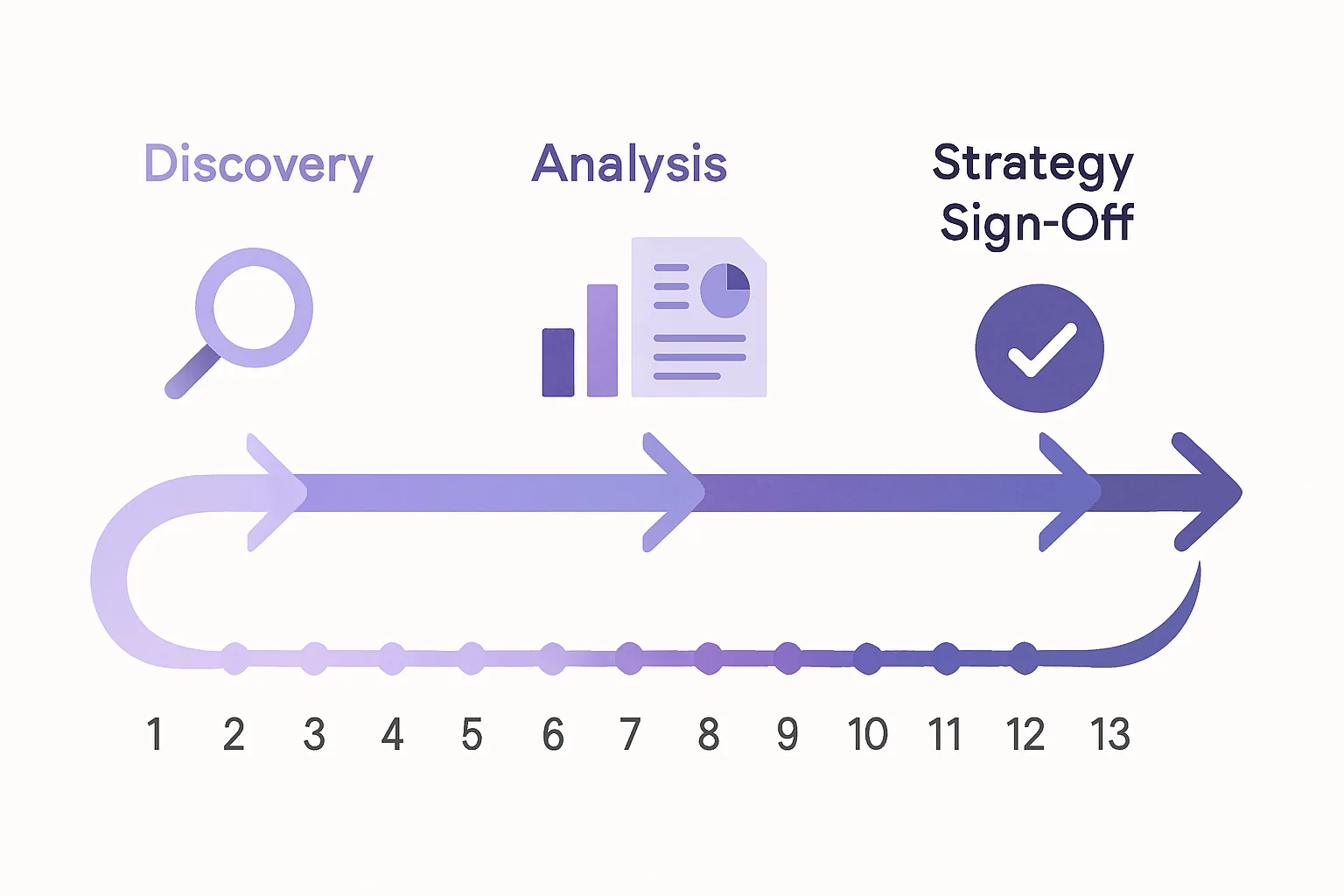
Days 1–2: Discovery and Access Collection
The clock starts the moment the contract is signed. Within 24 hours, the client should receive:
- A welcome email with a clear outline of what happens next
- An intake questionnaire covering business goals, target audience, past SEO history, brand guidelines, and known competitors
- An access request form listing every credential you need
The access list is non-negotiable. You need:
| Platform | Why You Need It |
|---|---|
| Google Analytics 4 | Traffic baselines, conversion tracking |
| Google Search Console | Keyword positions, indexing issues |
| CMS (WordPress, Shopify, etc.) | On-page changes, technical fixes |
| Google Business Profile | Local SEO, if applicable |
| Existing rank tracking tools | Historical data continuity |
| Social profiles (view access) | Content distribution context |
During these two days, also identify the key stakeholders. Who approves content? Who handles development requests? Who’s the day-to-day contact versus the executive sponsor? Getting this wrong means bottlenecks later.
One thing that saves enormous time here: ask the client for their own competitor shortlist. They know their market. Their list won’t be complete — you’ll add to it during the audit — but it gives you a starting point grounded in their reality, not just what a tool spits out.
Days 3–5: The Client Kickoff Meeting
The client kickoff isn’t a casual intro call. It’s the most important meeting of the entire engagement. Treat it that way.
Recommended agenda (60–90 minutes):
- Introductions and roles — who does what on both sides (10 min)
- Goal review — walk through their questionnaire answers, dig deeper (15 min)
- KPI definition — agree on 3–5 metrics that define success. Be specific: organic sessions, keyword visibility score, lead form submissions, revenue from organic. Not “more traffic.” (15 min)
- Communication cadence — weekly Slack updates? Biweekly calls? Monthly reports? Decide now. (10 min)
- Roadmap preview — high-level overview of the 14-day onboarding and what the 90-day plan will cover (15 min)
- Q&A and next steps — capture every open question (15 min)
Tips for running this well:
- Send the agenda 48 hours in advance. Clients who show up prepared make the meeting twice as productive.
- Record the call (with permission). You’ll reference it later when someone forgets what was agreed.
- End with a written summary sent within 24 hours — action items, owners, and deadlines.
The kickoff meeting is also where you start managing expectations around SEO timelines. More on that in the FAQ section below.
Days 6–10: Technical Audit and Baseline Reporting
This is where the real diagnostic work happens. Five days gives you enough time to be thorough without disappearing into a rabbit hole.
Your audit should cover:
- Technical SEO health — crawl errors, site speed (Core Web Vitals), mobile usability, indexation issues, structured data, XML sitemap status, robots.txt review
- Keyword baseline snapshot — current rankings for target terms, search visibility score, branded vs. non-branded split
- Content inventory — what exists, what performs, what’s thin or duplicate. If you’re working with a large site, consider a programmatic SEO playbook 2026 approach for scaling content audits efficiently.
- Backlink profile review — referring domain count, domain authority distribution, toxic link identification, competitor link gap
- Analytics health check — is GA4 tracking correctly? Are goals/conversions configured? Is Search Console verified and pulling data?
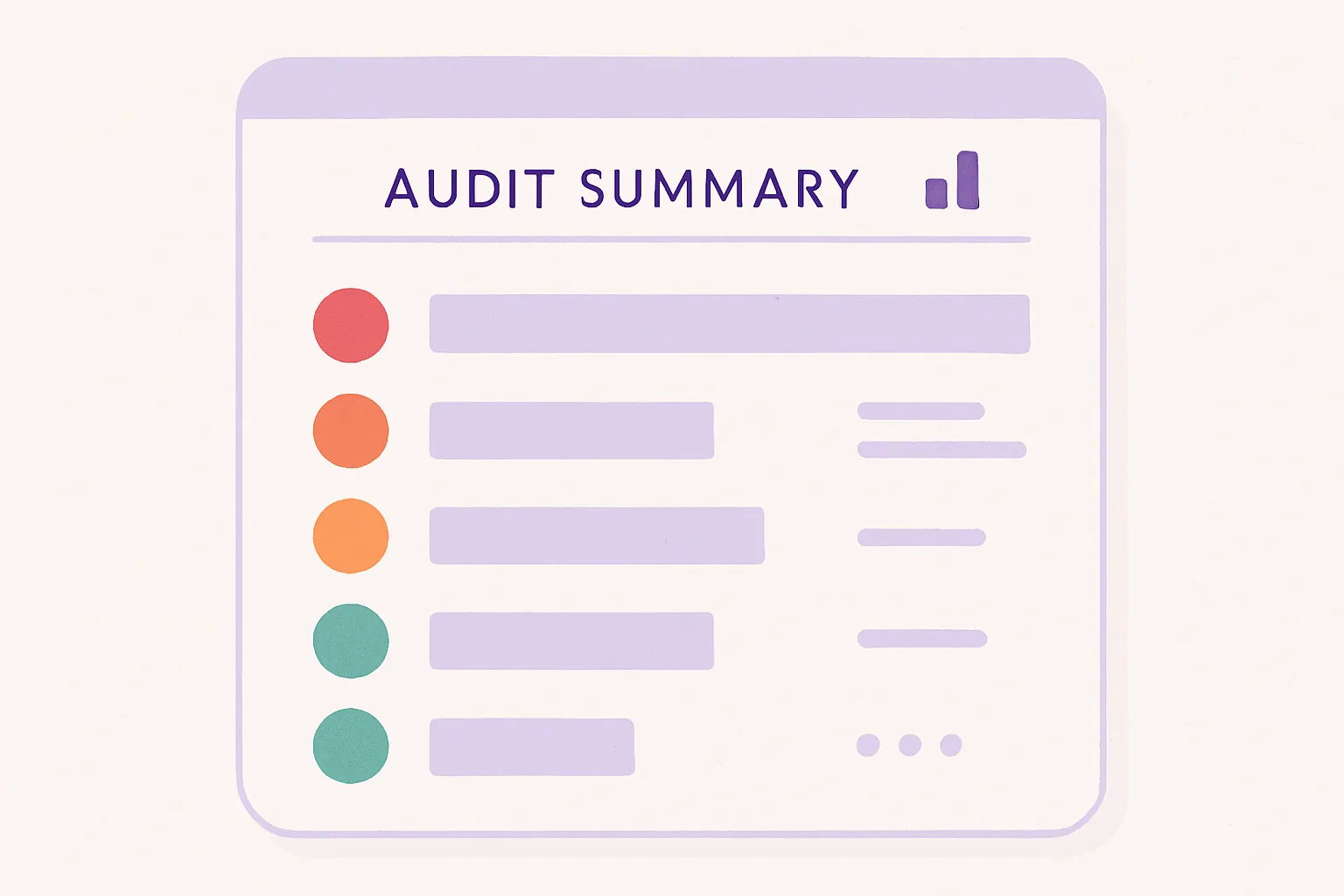
Documenting findings in a client-friendly format matters. Most clients don’t want a 47-page technical crawl report. They want:
- A summary of the top 10 issues, ranked by impact
- Plain-language explanations of what each issue means for their business
- A clear indication of what you’ll fix first
A simple traffic-light system works well here. Red for critical, yellow for important, green for minor. Clients grasp it instantly.
Days 11–13: Strategy Deck and Quick-Win Identification
With the audit complete, you now have the data to build a strategy that’s grounded in reality — not a cookie-cutter template you recycle for every client.
The 90-day strategy document should include:
- Executive summary — 2–3 paragraphs a CEO could read and understand
- Priority keyword clusters — organized by intent and difficulty
- Technical fixes roadmap — sequenced by impact and effort
- Content strategy — new pages, optimization targets, content gaps
- Link building plan — tactics, target velocity, and outreach approach
- Quick wins — the stuff you can ship in the first 30 days
Quick wins are critical. These are the low-effort, high-impact changes that show the client you’re already moving:
- Title tag and meta description rewrites for underperforming pages
- Internal linking improvements between related content clusters
- Thin content consolidation (merging 3 weak pages into 1 strong one)
- Fixing broken links and redirect chains
- Adding schema markup to key pages
Quick wins don’t replace long-term strategy. They buy you time and goodwill while the bigger plays develop.
Day 14: Strategy Presentation and Alignment Sign-Off
Day 14 is the capstone. You present the strategy, walk through the rationale, and get formal buy-in.
Structure the meeting around decisions, not just information:
- Present the 90-day plan with clear phases
- Confirm the content calendar for month one
- Review resource requirements — do they need to provide copy, approve designs, or loop in developers?
- Address concerns and adjust where needed. This is collaborative, not a lecture.
- Get sign-off. A verbal “sounds good” isn’t enough. Use a shared document or project management tool where the client formally approves the plan.
Once signed off, you transition into execution mode. The onboarding is done. The relationship is on solid ground. You have documented goals, a clear plan, and a client who knows exactly what’s coming next.
If you’re building out broader content operations alongside your SEO work, check out our blog for frameworks that complement this onboarding approach.
Agency Onboarding Templates and Tools That Save Hours
Doing this well for one client is manageable. Doing it for five simultaneously? That requires systems.
Essential Documents Every SEO Agency Needs Ready
Before you sign your next client, have these templates built and polished:
- Welcome packet — a PDF or shared doc covering your process, team bios, communication expectations, and FAQs
- Access request form — a checklist the client can hand directly to their developer with exact permissions needed per platform
- Onboarding checklist — a Notion board, Asana project, or spreadsheet with every task, owner, and deadline for the 14-day process
- Audit template — your standardized format for presenting technical findings
- Strategy deck skeleton — a slide or doc template you customize per client, not rebuild from scratch
Having these ready cuts onboarding time by 30–40%. You spend your energy on analysis and strategy instead of formatting documents.
Automating Repetitive Onboarding Steps
Automation shouldn’t replace the personal touch. It should eliminate the busywork that drains your attention from the work that actually matters.
Practical automations for agency onboarding:
- Templated email sequences triggered by contract signing — welcome email on day 1, access reminder on day 3, kickoff prep on day 4
- Project management automations — when a new client project is created in Asana or ClickUp, auto-populate the 14-day task list with due dates
- Pre-built reporting dashboards — connect GA4 and Search Console via Looker Studio templates that pull baselines automatically
- Calendar scheduling links — eliminate the back-and-forth of booking the kickoff call
The goal is consistency, not coldness. Automate the logistics. Personalize the conversations.
Common Onboarding Mistakes That Erode Client Trust
Even experienced agencies trip on these. Knowing the pitfalls matters as much as knowing the process.
Overpromising Results Before Seeing the Data
“We’ll get you to page one in three months” sounds great in a sales pitch. It sounds terrible three months later when you’re explaining why it didn’t happen.
Never commit to specific ranking positions or traffic numbers before your audit is complete. You don’t know what you’re working with yet. The site might have a manual penalty. The backlink profile might be toxic. The content might be entirely AI-generated fluff that Google has already devalued.
Instead, frame expectations around effort and process: “In the first 90 days, we’ll complete X, Y, and Z. Based on what we find in the audit, we’ll set specific targets at the strategy presentation.”
Skipping the Education Step With Non-Technical Clients
Not every client understands what a canonical tag is. Many don’t know the difference between organic and paid traffic. Some think SEO is a one-time fix.
Take 15 minutes during the kickoff to educate. Explain why SEO takes 4–6 months to show significant results (Ahrefs data supports this timeline). Walk through what a keyword actually represents. Show them what a SERP looks like and where their site currently appears.
This isn’t condescending. It’s respectful. Clients who understand the basics ask better questions, approve work faster, and panic less during normal ranking fluctuations.
Letting Weeks Pass Without Visible Progress
The most dangerous period in an SEO engagement is weeks 3–6. Onboarding is over, the big strategy is approved, and now you’re heads-down executing. But the client doesn’t see that. They see silence.
Ship something visible every week. A batch of optimized title tags. An internal linking update. A content brief for their review. A short Loom video showing what you worked on. Even a Slack message saying “Here’s what we completed this week” goes a long way.
Early deliverables — even small ones — justify the investment and keep momentum alive. If you’re looking for inspiration on scaling content production alongside these early wins, our welcome post covers the philosophy behind efficient content workflows.
Frequently Asked Questions About SEO Client Onboarding
How Long Should SEO Onboarding Take?
Seven to 14 days is the sweet spot. Shorter than a week and you’re cutting corners on the audit. Longer than two weeks and the client starts wondering what they’re paying for. Variables that affect timing include client responsiveness (access delays are the #1 bottleneck), site complexity (a 50-page site audits faster than a 50,000-page one), and your team’s bandwidth.
What Information Should You Collect From a New SEO Client?
At minimum, gather:
- Business goals and revenue targets
- Target audience and customer personas
- Past SEO work (agencies, freelancers, in-house efforts)
- CMS credentials
- GA4 and Search Console access
- Google Business Profile access (for local businesses)
- Brand guidelines and tone of voice documentation
- Known competitors
- Existing content assets (blog posts, whitepapers, videos)
- Any previous penalties or major algorithm impacts
What Should Be Included in an SEO Kickoff Meeting Agenda?
A strong client kickoff agenda covers introductions and role definitions, a goal and KPI review, communication preferences (channels, frequency, escalation paths), timeline expectations for the first 90 days, a high-level roadmap walkthrough, and clearly defined next steps with owners and deadlines.
How Do You Set Realistic SEO Expectations During Onboarding?
Use three anchors: historical data (what has this site achieved before?), industry benchmarks (what do similar sites in this vertical typically see?), and phased milestones (what does success look like at 3, 6, and 12 months?). Frame month 1–3 as foundation-building, months 4–6 as early traction, and months 7–12 as compounding growth. Avoid promising specific rankings. Promise a process and the transparency to show it’s working.
When Should You Deliver the First SEO Report After Onboarding?
Deliver a baseline report at the end of onboarding (day 14) that documents current rankings, traffic, and technical health. Then deliver the first performance report at day 30, showing what was executed, what changed, and what’s planned next. The baseline report is your “before” snapshot. Without it, you can never prove the “after.”
How Do You Handle Clients Who Are Slow to Provide Access?
This is the single most common onboarding delay. Three tactics that work:
- Set a deadline in the welcome email. “To stay on our 14-day timeline, we need all access credentials by [date].”
- Explain the business impact. “Each day without Search Console access delays our ability to identify your highest-impact opportunities.”
- Provide a developer-ready checklist. Many clients need to hand the request to someone technical. Give them a one-page document that lists every platform, the exact permission level needed, and who to grant access to.
Can You Onboard Multiple SEO Clients at Once Without Dropping Quality?
Yes — but only with templatized workflows, clear account ownership, and staggered kickoff scheduling. Don’t book three kickoff calls in the same week if one person runs all of them. Spread starts across a two-week window so audit phases don’t overlap. Assign a dedicated point person per account, even if senior strategists oversee multiple clients.
Turning a Strong Onboarding Into Long-Term Client Retention
Clients who feel organized, informed, and confident in the first 14 days stay longer. They expand scope. They refer other clients. They stop micromanaging because they trust the process.
The 14-day SEO client onboarding framework isn’t just an operational checklist — it’s a retention strategy disguised as a process. Every email sent on time, every meeting with a clear agenda, every audit delivered in plain language compounds into something harder to measure but impossible to fake: trust.
Build your onboarding checklist using the framework above. Templatize it. Refine it after every new client. The agencies that systematize their first 14 days are the ones that keep clients for 14 months — and beyond.