Running SEO Experiments With Statistical Rigor (Not Vibes)
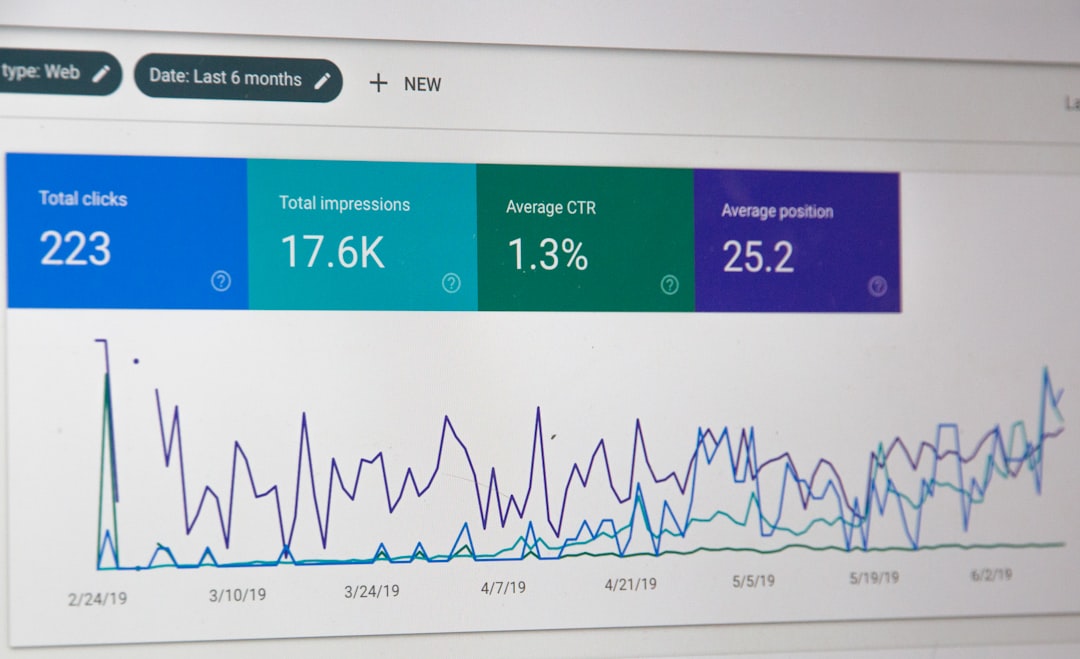
SEO experiments are structured tests that isolate specific variables—title tags, internal links, page speed—to measure their actual impact on organic search performance. They’re how you stop guessing and start knowing what works. Most teams skip the rigor: they make a change, watch traffic for a week, and declare victory or defeat based on whatever the graph looks like. That’s not experimentation. That’s astrology with a dashboard.
The problem runs deep. A team rewrites 200 title tags on a Tuesday. Organic traffic climbs 12% over the next month. The title tags get credit. Nobody mentions that a competitor’s site went down for three days, or that the brand ran a TV campaign, or that Google rolled out a minor ranking update during the same window. Correlation masquerading as causation is the default operating mode in SEO, and it leads to confident decisions built on sand.
What Are SEO Experiments and Why Most Teams Get Them Wrong
An SEO experiment applies the scientific method to organic search. You form a hypothesis, change one variable, measure the outcome against a control, and use statistics to determine whether the result is real or noise. Simple in concept. Rarely done in practice.
Most teams operate on a “change and hope” model. They redesign a section of the site, add structured data, rewrite content, and update internal links—all at once. When traffic moves (in either direction), they attribute it to whichever change the loudest person in the room championed. This isn’t testing. It’s narrative construction after the fact.
The Difference Between Observing Changes and Proving Causation
SEO exists inside a system with dozens of moving parts you don’t control. Algorithm updates roll out without warning. Competitors publish new content, earn links, or disappear entirely. Seasonal demand shifts traffic patterns. User behavior evolves. All of these things happen simultaneously, all the time.
Without a control group—a set of comparable pages you didn’t change—you can’t separate your intervention from everything else happening in the ecosystem. You’re reading tea leaves. A control group absorbs the same external forces as your treatment group. If the treatment group outperforms the control, you have actual evidence. If both groups move together, you know your change didn’t matter, even if traffic went up.
This is the single most important concept in SEO testing: controls protect you from your own confirmation bias.
How SEO A/B Testing Actually Works
SEO A/B testing differs fundamentally from conversion rate optimization testing. In CRO, you randomly assign users to variant A or variant B. You can’t do that with Googlebot. There’s one Googlebot, and it sees one version of your page. You can’t serve it two versions simultaneously and split its “decisions.”
Two main approaches exist for split testing SEO:
- Group-based split testing: Select a pool of similar pages, divide them into treatment and control groups, apply your change only to the treatment group, and compare performance over time.
- Time-based testing: Change something on a page (or set of pages), then compare performance before and after the change using statistical models that account for trends and seasonality.
Group-based testing is stronger because it runs concurrently—both groups experience the same external conditions. Time-based testing is weaker but sometimes the only option, particularly for sites without large pools of similar pages.
If you’re working with large-scale, template-driven pages—the kind covered in our Programmatic SEO Playbook 2026—group-based testing becomes especially powerful because you have hundreds or thousands of structurally identical pages to work with.
Time-Based Testing vs. Group-Based Split Testing SEO
Time-based testing is the simpler approach. You change something, then compare the “after” period to the “before” period. The weakness is obvious: anything else that changed during that window becomes a confounding variable. You can mitigate this with Bayesian structural time-series models (more on that below), which build a predicted “what would have happened” baseline using external signals. But it’s still inherently noisier than a concurrent control group.
Group-based split testing is the gold standard for SEO experiments. You select two groups of pages with similar characteristics, change one group, and leave the other alone. The control group acts as your counterfactual. If Google pushes an algorithm update mid-test, both groups get hit equally—so the relative difference between them still reflects your change.
When to use each:
| Approach | Best For | Weakness |
|---|---|---|
| Time-based | Single pages, small sites, site-wide changes you can’t partially apply | Confounded by external factors |
| Group-based | Sites with 100+ similar pages (product pages, listings, blog posts) | Requires sufficient page inventory |
Selecting Control and Treatment Page Groups
Bad group selection kills experiments before they start. Your treatment and control groups need to be statistically comparable—similar traffic levels, similar templates, similar historical performance trends.
Here’s how to do it well:
- Start with a homogeneous page type. Product pages, city landing pages, blog posts within a single category. Don’t mix page types.
- Check historical trends. Pull 8-12 weeks of GSC data for each page. Plot the aggregate trends for both groups. They should track closely. If one group was already trending up while the other was flat, your results will be meaningless.
- Randomize the split. Don’t cherry-pick your “best” pages for the treatment group. Use random assignment within the eligible pool.
- Ensure sufficient sample size. You generally need 50+ pages per group for group-based tests. Fewer pages means you’ll only detect very large effect sizes, and most SEO changes produce modest ones.
A useful rule of thumb: if you can’t get at least 40-50 pages per group with reasonably similar traffic distributions, consider a time-based approach instead.
Choosing the Right Metrics To Measure
Not all metrics are equally useful for SEO experiments.
Clicks from Google Search Console are usually your best primary metric. They directly reflect user behavior driven by organic search visibility. Impressions work well too, especially for experiments targeting discoverability (like internal linking changes that affect crawl depth).
Average position is tempting but noisy. A page can rank #8 for 500 queries, and a position change on a handful of long-tail terms can swing the average without any meaningful impact on traffic. Use it as a secondary diagnostic, not a primary success metric.
CTR is ideal for title tag and meta description experiments specifically, since those changes directly influence click-through rate without necessarily changing rankings.
For technical SEO experiments—say, testing whether a new rendering approach improves indexation—indexation rate (indexed pages / total pages) becomes the primary metric.
Statistical Significance in SEO: When You Can Trust Your Results
Statistical significance in SEO tells you whether the difference you observed between treatment and control is likely real or just random fluctuation. The standard threshold is a p-value below 0.05, meaning there’s less than a 5% probability the result occurred by chance.
But here’s the catch that trips up most SEO practitioners: organic search data isn’t like coin flips. It’s time-series data with autocorrelation—today’s traffic is correlated with yesterday’s traffic. Standard statistical tests assume independent observations, and SEO data violates that assumption aggressively.
Why Standard T-Tests Often Fail for Organic Search Data
A simple t-test comparing mean clicks between treatment and control groups can work if you aggregate properly (e.g., comparing the total treatment group’s performance against the total control group’s performance at the group level). But if you’re doing time-based testing—comparing before vs. after on the same pages—a t-test on daily data will dramatically overestimate significance because it treats each day as an independent observation. It isn’t. Monday traffic correlates with Tuesday traffic.
Better alternatives:
- CausalImpact analysis: Google’s open-source R package uses Bayesian structural time-series models to estimate what would have happened without your intervention, then compares that counterfactual to what actually happened. It handles autocorrelation and provides posterior probability estimates.
- Synthetic control methods: Build a “synthetic” version of your treatment group from weighted combinations of control pages, then measure divergence after the intervention.
- Bootstrapping: Resample your data with replacement to build confidence intervals without parametric assumptions. Works well for group-based tests where you want to assess the robustness of your result.
For most teams, CausalImpact is the most accessible starting point. It’s free, well-documented, and designed specifically for this type of problem.
How Long To Run an SEO Experiment Before Drawing Conclusions
Minimum two weeks. Realistically, four weeks for most tests. Six to eight weeks for experiments on lower-traffic pages or changes that require recrawling and reindexing.
Why so long? Three reasons:
- Crawl and indexation lag. Google doesn’t recrawl every page daily. After you make a change, it might take days or weeks for Googlebot to discover it, re-render the page, and update the index. Your experiment hasn’t truly “started” until Google has processed the change.
- Weekly cycles. Search behavior follows weekly patterns. B2B queries spike on weekdays; consumer queries often peak on weekends. You need at least two full weekly cycles to avoid day-of-week bias.
- The peeking problem. Checking results daily and stopping when they look good inflates your false positive rate. This is the multiple comparisons problem—the more times you check, the more likely you’ll catch a random fluctuation and mistake it for a real effect. Set your test duration in advance and stick to it.
Dealing With External Noise: Algorithm Updates and Seasonality
A Google core update lands in the middle of your experiment. Now what?
If you’re running a group-based test, you’re probably fine. Both groups experience the same algorithm change. The relative difference between them still reflects your intervention, not Google’s update. This is the superpower of concurrent controls.
If you’re running a time-based test, a mid-experiment algorithm update is more problematic. Your “before” period operated under different algorithmic conditions than your “after” period. In this case:
- Check whether CausalImpact’s counterfactual prediction still tracks your control signals. If it does, the model may have absorbed the update.
- If the update caused a dramatic, discontinuous shift, consider discarding the results and restarting after the dust settles.
- Document the update’s timing in your experiment log regardless.
Seasonality is easier to handle. For group-based tests, it’s a non-issue (both groups experience the same season). For time-based tests, include seasonal covariates in your model, or compare against the same period in the prior year as a sanity check.
Practical SEO Experiment Ideas Worth Testing First
Theory is useful. Shipping your first test is better. Here are high-impact experiments sorted by difficulty, starting with the easiest.
Title Tag and Meta Description Variations
This is the single best first experiment for any team. Title tags are lightweight to change, easy to revert, and their impact shows up directly in CTR data from Search Console.
Test ideas:
- Move the primary keyword to the front of the title vs. the end
- Add a number (“7 Best…” vs. “Best…”)
- Include the current year
- Test emotional modifiers (“Essential,” “Complete,” “Proven”) against neutral titles
- Shorten titles to under 55 characters vs. leaving them at 60-65
Apply the change to your treatment group. Leave the control group’s titles untouched. Measure CTR changes over 3-4 weeks. You’ll often see 5-15% CTR lifts from well-targeted title tag changes, which is large enough to detect with moderate page counts.
Internal Linking Structure Changes
Add 2-3 contextual internal links to every page in your treatment group, pointing from high-authority pages deeper into the site. Leave the control group alone.
Measure impressions and clicks. Internal linking experiments typically need 4-6 weeks because the mechanism is indirect—you’re changing how Google discovers and values pages, which takes time to propagate through crawling and indexing cycles.
This type of experiment pairs well with programmatic approaches. If you’re scaling internal links across hundreds of template pages, the methodology described in our Programmatic SEO Playbook 2026 provides a useful operational framework.
Content Depth and Structural Markup Tests
Adding FAQ schema to a set of pages. Expanding thin content from 300 words to 1,000+. Restructuring flat content into clear H2/H3 hierarchies.
The critical discipline here: change one thing at a time. If you add FAQ schema and expand the content and restructure the headings, you won’t know which change drove the result. Run separate experiments for each, or accept that you’re testing a bundle of changes as a single intervention.
Page Speed and Core Web Vitals Impact
Roll out performance improvements—lazy loading, image compression, reduced JavaScript—to a treatment group. Measure organic traffic impact.
Here’s what teams consistently find: CWV improvements rarely produce dramatic organic traffic gains. Google has stated that page experience is a tiebreaker signal, not a primary ranking factor. A page that goes from a 4-second LCP to a 2-second LCP might see modest improvements, or none at all.
That “null result” is genuinely valuable. It tells you to invest your page speed efforts where they actually pay off—conversion rate optimization—rather than expecting an organic traffic bonanza.
Building a Repeatable SEO Testing Framework for Your Team
One experiment is an event. A testing framework is a capability. The difference matters.
Writing a Testable Hypothesis Before Touching Anything
Every experiment starts with a written hypothesis. Not a vague goal—a specific, falsifiable prediction.
Template:
If we [specific change] on [page group], then [metric] will [increase/decrease] by [estimated amount] within [timeframe], because [reasoning based on how search engines or users work].
Example:
If we move the primary keyword to the first three words of the title tag on our 120 product category pages, then organic CTR will increase by 8-12% within 4 weeks, because eye-tracking studies suggest users scan the left side of search results first.
No hypothesis = no experiment. Just a change with post-hoc rationalization waiting to happen.
Documenting Results Whether They Win, Lose, or Draw
Negative results are not failures. A test that shows “adding FAQ schema to our product pages had no measurable impact on clicks” saves you from rolling that change out to 5,000 pages. That’s worth knowing.
Document every experiment with:
- Hypothesis (written before the test)
- Methodology (treatment/control group details, sample sizes, test duration)
- Raw data (GSC exports, statistical outputs)
- Conclusion (statistically significant positive, negative, or inconclusive)
- Next steps (roll out, roll back, or iterate)
Store these in a shared location your team actually uses. A simple spreadsheet works. A Notion database works. A 47-page PDF nobody reads does not.
Over time, this documentation becomes institutional knowledge—a library of what actually works for your site, not generic SEO advice from the internet. Explore more frameworks and approaches on our blog.
Prioritizing Experiments by Effort, Impact, and Confidence
You’ll generate more test ideas than you can run. Prioritize with a simple scoring framework:
| Factor | Question | Score 1-5 |
|---|---|---|
| Impact | How many pages does this affect? How much traffic is at stake? | |
| Confidence | How strong is the prior evidence that this will work? | |
| Ease | How hard is this to implement and measure? |
Start with high-ease, high-page-count tests. Title tag experiments on template pages. Internal link additions via a CMS rule. These build your team’s testing muscle without requiring engineering sprints.
Save complex experiments—like testing a complete page template redesign or a new rendering architecture—for after you’ve run 3-5 simpler tests and built confidence in your methodology.
Frequently Asked Questions About SEO Experiments
Can You A/B Test SEO the Same Way You A/B Test Conversion Rates?
No. CRO A/B testing randomly assigns individual users to different page variants. You can’t do this with Googlebot—there’s one crawler, and it needs to see one canonical version of each page. SEO testing uses group-based approaches (different pages get different treatments) or time-based approaches (same pages, different time periods) instead.
How Many Pages Do You Need To Run a Valid SEO Split Test?
For group-based tests, aim for at least 50 similar pages per group—100+ is better. Fewer pages means you’ll only detect very large effect sizes (20%+ changes), and most SEO interventions produce single-digit percentage improvements. For single-page tests, you’re limited to time-based analysis with wider confidence intervals.
Do SEO Experiments Risk Hurting Your Rankings?
Yes, that’s a real risk. A title tag change that reduces CTR will hurt the pages in your treatment group. Mitigation strategies: test on a subset (not your entire site), monitor results weekly for catastrophic drops, and have a documented rollback plan before you start. The counterpoint: making uninformed site-wide changes without testing first carries far greater risk.
What Tools Can You Use To Run and Analyze SEO Tests?
Google Search Console provides the raw data (clicks, impressions, CTR, position). Google’s CausalImpact R package handles time-series analysis for before/after tests. Python (with scipy, statsmodels, or PyMC) or R handles statistical analysis for group-based tests. Several purpose-built SEO testing platforms exist that automate group selection, change deployment, and statistical analysis—worth evaluating once you’re running tests regularly.
How Do You Test SEO on a Small Site With Limited Pages?
Time-based testing with CausalImpact analysis is your primary tool. Use external data (industry trends, competitor visibility indices) as control signals to build a synthetic counterfactual. Accept that your confidence intervals will be wider. Focus on high-impact changes where effect sizes are likely large enough to detect—a complete content overhaul rather than a minor title tweak.
Should You Roll Back an SEO Experiment That Shows Negative Results?
If the result is statistically significant and negative, roll it back. Quickly. Don’t fall into the sunk cost trap of keeping a harmful change because your team spent three weeks implementing it. If the result is inconclusive, consider extending the test duration before deciding. An inconclusive result means you don’t have enough data, not that the change doesn’t matter.
What Is the Biggest Mistake Teams Make With SEO Testing?
Declaring winners too early. Someone checks the data on day five, sees a 15% lift, and emails the VP. That “lift” was random noise. The second-biggest mistake: changing multiple variables simultaneously and attributing the entire result to one of them. Discipline around single-variable testing and pre-committed test durations separates real experimentation from storytelling.
Stop Guessing, Start Proving: Your First Experiment Starts Now
The goal isn’t perfect experimental design on your first attempt. It’s moving from opinion-based SEO to evidence-based SEO, one test at a time.
Start here: pick 100 similar pages on your site. Split them into two groups of 50. Rewrite the title tags on one group using a specific, documented pattern. Leave the other group untouched. Pull CTR data from Search Console after four weeks. Run a basic statistical comparison.
That’s it. That’s your first real SEO experiment. Document everything—your hypothesis, your page selections, your results. Win or lose, you’ll learn more from that single test than from six months of “best practice” blog posts.
The teams that test consistently don’t just optimize faster. They optimize differently, because they stop wasting cycles on changes that don’t actually move the needle. Every null result narrows the search space. Every positive result compounds.
Your site is generating data right now. Use it.
References
- Google CausalImpact package documentation: https://google.github.io/CausalImpact/
- Google Search Central, Page Experience documentation: https://developers.google.com/search/docs/appearance/page-experience
- Multiple comparisons problem (Wikipedia): https://en.wikipedia.org/wiki/Multiple_comparisons_problem