SERP Feature Tracking: The Metric Most Agencies Skip
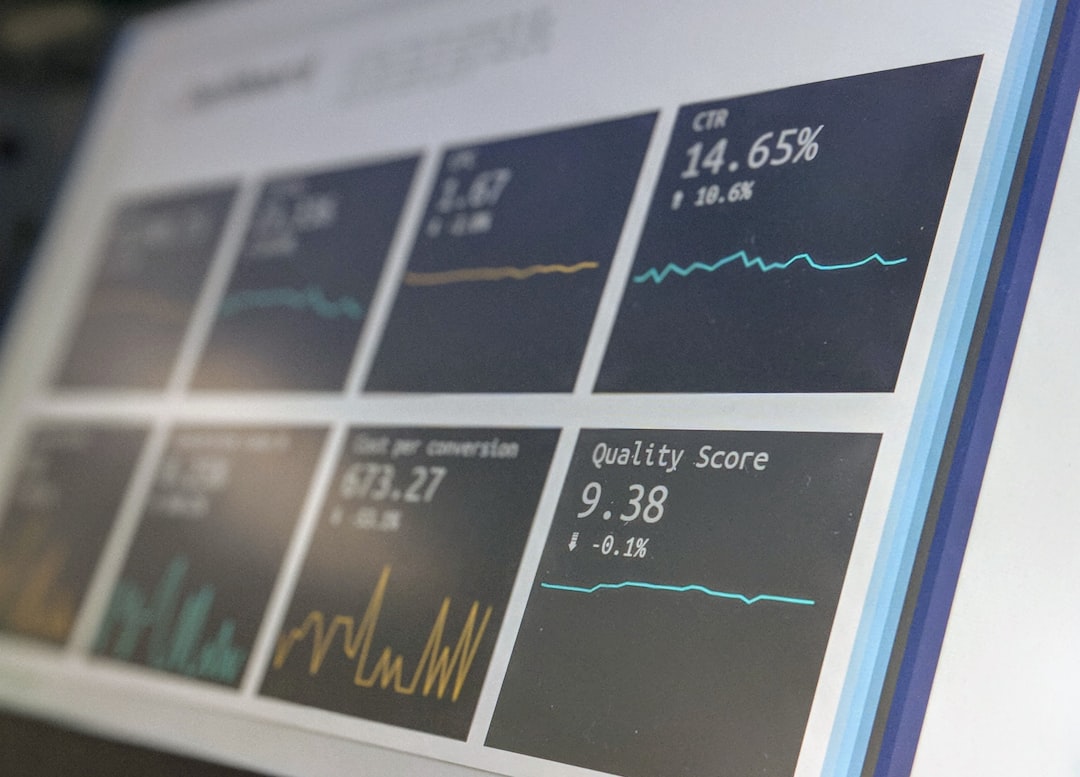
SERP feature tracking is the practice of monitoring which enhanced search results — featured snippets, People Also Ask boxes, local packs, knowledge panels, image carousels, and more — a domain owns, loses, or could realistically capture. It’s the single most overlooked metric in agency SEO reporting, and it’s costing teams credit for work they’ve already done.
Here’s the problem. Most agencies still report rankings as a list of position numbers for blue links. But the search results page hasn’t been ten blue links since roughly 2015. Today, a query like “how to fix a leaky faucet” might surface a featured snippet, a video carousel, a People Also Ask box, and a set of image results — all before the first traditional organic listing. If your client owns that snippet, they’re winning. If they don’t, their #1 blue-link ranking might be sitting below the fold.
Traditional rank tracking alone gives an incomplete picture of organic visibility. SERP visibility — a holistic measure of how much real estate your domain controls on the results page — tells the actual story.
What Is SERP Feature Tracking and Why Does It Matter?
At its core, SERP feature tracking monitors the enhanced result types that appear for your tracked keywords and records who owns them. It answers questions rank tracking can’t:
- Did we lose the featured snippet for our highest-traffic keyword last Tuesday?
- Which competitors hold the People Also Ask positions for our target terms?
- Are video carousels appearing for queries where we only have text content?
This data layer transforms SEO reporting from a simple position log into a strategic visibility map. Agencies that track SERP features catch opportunities faster, explain traffic fluctuations more accurately, and demonstrate value that goes far beyond “we moved you from position 7 to position 4.”
The Full Landscape of SERP Features Worth Monitoring
Not every SERP feature matters equally to every client. The features worth tracking depend on the business model, but here’s the full catalog:
| SERP Feature | Most Impactful For | Typical Trigger |
|---|---|---|
| Featured Snippets | Informational/educational sites, SaaS, B2B | Question-based and definitional queries |
| People Also Ask (PAA) | Content publishers, blogs, knowledge bases | Broad informational queries |
| Local Pack | Local businesses, multi-location brands | “Near me” and geo-modified queries |
| Image Pack | E-commerce, travel, recipes, design | Visual-intent queries |
| Video Carousel | How-to content, entertainment, education | Instructional and entertainment queries |
| Shopping Results | E-commerce, DTC brands | Product and transactional queries |
| Knowledge Panel | Brands, public figures, organizations | Branded and entity queries |
| Sitelinks | Established domains with clear site architecture | Branded navigational queries |
| Top Stories | News publishers, media outlets | Trending and newsworthy topics |
| FAQ Rich Results | Any site using FAQ schema | Question-oriented queries |
| Review Stars | E-commerce, local services, SaaS | Product and service queries |
An e-commerce agency that ignores shopping results and product rich results is flying blind. A local SEO agency that doesn’t track local pack ownership is leaving its best proof of performance on the table.
How Zero-Click Results Changed the Visibility Equation
SparkToro’s research found that roughly two-thirds of Google searches end without a click to any website. That number has only grown as Google continues expanding its own answer surfaces.
What this means for agencies: a #1 organic ranking can still lose traffic to a featured snippet sitting above it. A knowledge panel can satisfy a branded query entirely. A PAA box can siphon clicks that would have gone to position 3 or 4.
If you’re not tracking which SERP features appear for your keywords — and who controls them — you’re measuring visibility with one eye closed. The client sees declining traffic and blames your SEO work, when the real cause might be a featured snippet they lost three weeks ago or a new video carousel that pushed their listing below the fold.
This is the core argument for serp feature tracking as a standard practice, not an add-on.
Measuring Featured Snippet Share and Rich Results Performance
Knowing that SERP features matter is step one. Measuring them systematically is where agencies actually gain an edge. Two metrics deserve permanent spots in your reporting: featured snippet share and rich results tracking coverage.
Calculating Your Featured Snippet Share
Featured snippet share is the percentage of your tracked keywords where your domain holds the featured snippet position. It’s a clean, defensible number that clients understand immediately.
Here’s how to calculate it:
- Identify snippet-eligible keywords. Pull your full keyword tracking set. Filter to keywords where a featured snippet currently appears in the SERP (most rank tracking tools flag this).
- Determine ownership. Of those snippet-eligible keywords, count how many snippets your domain currently holds.
- Calculate the share.
Featured Snippet Share = (Snippets Owned ÷ Snippet-Eligible Keywords) × 100
Example: You track 500 keywords for a B2B SaaS client. 120 of those keywords trigger a featured snippet. Your client owns 18 of them. That’s a 15% featured snippet share.
- Track changes weekly or monthly. A rising snippet share directly correlates with increased SERP real estate. A declining share signals content that needs defending.
| Month | Snippet-Eligible Keywords | Snippets Owned | Featured Snippet Share |
|---|---|---|---|
| January | 120 | 18 | 15.0% |
| February | 124 | 22 | 17.7% |
| March | 128 | 31 | 24.2% |
That table tells a clearer performance story than any list of rank positions ever could. If you’re running large keyword sets, the approach scales well with the kind of automation covered in our programmatic SEO playbook for 2026.
Tracking Rich Results Beyond Snippets
Featured snippets get the most attention, but they’re just one slice of the rich results universe. Your tracking should also cover:
- FAQ rich results — Appear when FAQ schema is correctly implemented. Verify deployment in Google’s Rich Results Test and monitor impressions in Search Console’s Enhancements report.
- How-to markup — Particularly valuable for instructional content. Google has scaled back how-to rich results on desktop but they still appear on mobile for certain queries.
- Review stars — Product and aggregate review schema can significantly boost CTR. Track which product pages are generating star ratings in search results.
- Video thumbnails — Pages with embedded video can earn thumbnail previews in organic results. These aren’t guaranteed, so tracking which pages actually receive them matters.
- Product rich results — Price, availability, and rating data pulled from product schema. Essential for e-commerce clients.
Google Search Console’s Enhancements section reports on valid, invalid, and warning-state structured data by type. Check it at least weekly. When valid items suddenly drop, something broke — maybe a CMS update stripped your schema, maybe Google changed its parsing rules.
For verification at the page level, run URLs through Google’s Rich Results Test to confirm what structured data Google actually sees and which results it considers eligible.
Building a SERP Visibility Score for Client Reporting
Raw rank positions don’t account for the visual and functional reality of modern SERPs. A composite SERP visibility score does.
Here’s a practical framework for building one:
Components:
- Weighted rank score — Assign CTR-weighted values to each ranking position. Position 1 gets a higher weight than position 5, based on published CTR curves like those from Advanced Web Ranking.
- SERP feature ownership bonus — Add points when the domain holds a featured snippet, PAA placement, or other enhanced result. A featured snippet might add a bonus equivalent to a position-1 ranking.
- Feature displacement penalty — Subtract points when a SERP feature the domain doesn’t own pushes its organic listing further down the visible page.
Why this works for client conversations: Instead of explaining that “we rank #3 but there’s a featured snippet above us and a video carousel and a PAA box, so our effective visibility is lower than you’d expect,” you show a single score trending upward or downward. Executives and marketing directors grasp it instantly.
A visibility score of 72 that climbed from 58 last quarter tells the story. The granular data backs it up for anyone who wants to dig in.
A Practical Framework for SERP Feature Tracking in Agency Workflows
Strategy without implementation is just a slide deck. Here’s how to bake SERP feature tracking into your existing workflows without doubling your team’s workload.
Segmenting Keywords by Feature Opportunity
During keyword research and tracking setup, tag every keyword with the SERP features that currently appear for it. Most enterprise-grade rank trackers export this data. If yours doesn’t, it’s time to evaluate your tooling.
Create segments like:
- Snippet opportunity — Featured snippet present, not owned by client
- Snippet defended — Featured snippet present, owned by client
- PAA opportunity — PAA box present, client not included
- Local pack relevant — Local pack appears, client eligible
- Video opportunity — Video carousel present, client has no video content
This segmentation drives prioritization. A keyword with 8,000 monthly searches and an unowned featured snippet is a higher-leverage target than a keyword with 12,000 searches and no special features. The snippet keyword offers a shortcut to dominant visibility.
When working at scale, this kind of keyword segmentation pairs naturally with programmatic SEO approaches that can systematically target feature-rich SERPs across hundreds or thousands of queries.
Optimizing Content to Win and Defend SERP Features
Different features require different optimization tactics. Here’s what actually works:
For featured snippets:
- Structure your answer in the format Google prefers for that query. Check the current snippet: is it a paragraph, a numbered list, a bulleted list, or a table? Match that format.
- Place a concise, direct answer (40-60 words for paragraph snippets) immediately after the question-as-heading.
- Use H2 or H3 tags that mirror the query language.
- For list snippets, use proper HTML list markup. Don’t fake lists with line breaks.
For People Also Ask:
- Create content that answers related questions within the same page. Each answer should be concise (1-2 short paragraphs) under a clear heading that matches the PAA question.
- PAA results frequently pull from pages that aren’t ranking in the top 3 organic positions. You don’t need position 1 to win a PAA slot.
For image packs:
- Use descriptive, keyword-relevant file names and alt text.
- Ensure images are high quality and appropriately sized.
- Original images outperform stock photos for image pack inclusion.
For video carousels:
- Host video on YouTube (Google overwhelmingly favors YouTube for video carousels) and embed it on your page.
- Use descriptive titles, thorough descriptions, and proper chapter timestamps.
Defending owned snippets: This part gets overlooked. Once you own a featured snippet, competitors will try to take it. Monitor snippet ownership weekly. If you lose one, check whether your content has become outdated, whether the snippet format shifted, or whether a competitor published a better-structured answer. Refresh and re-optimize quickly — snippet recapture is usually faster than initial capture.
Automating Alerts for Feature Gains and Losses
Manual SERP checking doesn’t scale past a handful of keywords. Set up automated monitoring:
- Daily checks for high-priority keywords. Your top 20-50 revenue-driving terms deserve daily SERP feature monitoring.
- Weekly checks for the broader keyword set. Flag any changes in feature ownership.
- Automated alerts when a featured snippet is won or lost, when a rich result drops out of Search Console’s valid count, or when a new SERP feature appears for a tracked keyword that didn’t previously have one.
Most professional rank tracking platforms support SERP feature change alerts via email or Slack. If you’re building custom solutions, a daily scrape comparison script can flag changes and push notifications.
The goal: no one on your team should discover a lost featured snippet by accident during a monthly report. They should know within 24 hours.
Frequently Asked Questions About SERP Feature Tracking
What SERP Features Should I Track First?
Start with the features most relevant to your client’s business model. For informational and B2B sites, prioritize featured snippets and PAA boxes. For local businesses, the local pack is non-negotiable. E-commerce clients need product rich results and shopping result monitoring. Don’t try to track everything at once — focus on the features that directly impact your client’s revenue queries.
How Often Do SERP Features Change for a Given Keyword?
SERP features can fluctuate daily. Featured snippets are particularly volatile — a study by SEMrush found that snippet ownership can change frequently, with many snippets rotating between multiple domains within a single month. Track high-priority terms daily and your broader keyword set at least weekly.
Does Owning a Featured Snippet Actually Increase Traffic?
Usually, yes — but it’s nuanced. For queries where users need more detail than the snippet provides, snippet ownership can dramatically increase CTR. Ahrefs research found that featured snippets capture roughly 8.6% of clicks on average, pulling clicks from the results below. For simple factual queries (“what year was X founded”), the snippet may satisfy the user entirely. Net effect: snippet ownership is positive for both traffic and brand authority in the vast majority of cases.
Can You Track SERP Features Without Paid Tools?
Partially. Google Search Console shows data on some rich result types through its Enhancements and Performance reports (filter by search appearance). You can manually check SERPs for a small keyword set. Custom scripts using search APIs offer a middle ground. But systematic serp feature tracking at scale — across hundreds or thousands of keywords with historical trending — typically requires dedicated tooling.
How Does SERP Feature Tracking Differ From Traditional Rank Tracking?
Traditional rank tracking reports your position number for blue-link organic results. SERP feature tracking monitors which enhanced results appear on the page and who owns them. They’re complementary data layers. You might rank #1 organically but have zero SERP feature ownership — or rank #6 but hold a featured snippet that gets more clicks than positions 1-5 combined.
What Is the Difference Between SERP Visibility and Organic Rankings?
SERP visibility accounts for the full search results page — features, layout, pixel position, and estimated CTR — while organic rankings only reflect blue-link position. A domain ranking #1 on a SERP with a featured snippet, video carousel, and PAA box above it has lower real visibility than a domain ranking #3 on a clean SERP with no features. Visibility is the more accurate measure of real-world search presence.
How Do I Report SERP Feature Wins to Clients?
Three approaches that work well together:
- Before/after SERP screenshots — Visual proof that the client now owns a featured snippet or rich result they didn’t have before.
- Trend charts — Show featured snippet share and SERP visibility scores over time. Upward trends are immediately compelling.
- Traffic correlation — Tie feature wins to impression and click lifts in Search Console. Filter the Performance report by search appearance to isolate rich result traffic.
Frame SERP feature wins as earned real estate. “We now own the featured snippet for ‘best project management software’ — that’s premium placement above every organic result, including competitors paying for ads below it.” Clients understand real estate.
Stop Reporting Rankings Alone — Start Tracking What Clients Actually See
The SERP hasn’t been a simple list of links in years. Every month that an agency reports only blue-link positions, it underreports wins and misses optimization opportunities hiding in plain sight.
Here’s a quick audit for your current setup:
- Do your tracking dashboards show SERP feature ownership? If not, you’re reporting incomplete data.
- Can you calculate your clients’ featured snippet share right now? If not, you’re missing a high-impact metric.
- Do you get alerts when a client wins or loses a SERP feature? If not, you’re reacting to problems weeks too late.
- Does your reporting include a SERP visibility score? If not, you’re making executives interpret raw position data they don’t care about.
Add feature-level monitoring as a standard practice — not an upsell, not a premium add-on, but a baseline. The data is available. The tools exist. The only thing missing at most agencies is the decision to start.
Audit your tracking setup this week. Tag your keyword sets by feature opportunity. Set up your first round of automated alerts. The agencies that treat serp feature tracking as standard practice will outperform those still counting blue links — and they’ll have the reporting to prove it.
We take data privacy seriously across everything we build and recommend. Learn more about our approach to privacy.
References:
- SparkToro. “In 2020, Two-Thirds of Google Searches Ended Without a Click.” sparktoro.com
- Advanced Web Ranking. “CTR Study.” advancedwebranking.com
- Ahrefs. “Featured Snippets Study.” ahrefs.com
- SEMrush. “Featured Snippet Study.” semrush.com