Zero-Click Search Strategy: How to Win When Google Keeps the Traffic
A zero-click search strategy is the practice of optimizing your brand and content to capture visibility, authority, and conversions directly on Google’s search results page — even when users never click through to your website. With studies showing that roughly 60% of Google searches now end without a click to any external site, this isn’t a fringe concern. It’s the dominant reality of modern search.
Google has spent years transforming its results pages from a list of blue links into a self-contained answer engine. Featured snippets, knowledge panels, People Also Ask boxes, local map packs, and now AI Overviews all serve one purpose: keeping users inside Google’s ecosystem. If your SEO strategy still measures success purely by organic clicks, you’re measuring a shrinking pie.
The shift isn’t slowing down. It’s accelerating. And the businesses that adapt will own the SERP while everyone else wonders where their traffic went.
What Is a Zero-Click Search and Why It Matters Now
A zero-click search occurs when Google answers a user’s query directly on the search engine results page (SERP), eliminating the need to visit any website. The user types a question, gets their answer, and moves on.
This isn’t new — Google has displayed quick answers for years. What’s new is the scale. A 2024 study by SparkToro and Datos found that for every 1,000 Google searches in the US, only 374 clicks went to the open web. The rest either went to Google-owned properties (like YouTube or Google Maps) or resulted in zero clicks entirely. On mobile, the numbers are even more stark.
Why is this accelerating? Three forces are converging:
- Google’s AI investments — AI Overviews synthesize answers from multiple sources, making clicks feel unnecessary for informational queries.
- SERP feature expansion — Google keeps adding structured answer formats that satisfy intent on-page.
- Mobile-first behavior — Small screens reward quick answers. Users on phones are less inclined to tap through to websites when the SERP already gives them what they need.
Ignoring zero-click search means surrendering the most visible real estate in digital marketing. Your competitors show up in snippets, knowledge panels, and PAA boxes. You don’t. Users form impressions, build trust, and make decisions — all before they ever consider clicking.
The SERP Features Driving Zero-Click Results
Each of these SERP features serves as a self-contained answer mechanism:
- Featured Snippets — The “position zero” box that extracts a paragraph, list, or table from a webpage and displays it above organic results. A user searching “how to calculate churn rate” gets the formula right there.
- Knowledge Panels — The right-sidebar cards that aggregate entity information from multiple sources. Search any major company, person, or concept, and Google assembles a mini-profile without requiring a click.
- People Also Ask (PAA) — Expandable question boxes that cascade into related queries. Each expansion shows a snippet-style answer pulled from a different source. Users can explore five or six related questions without leaving the SERP.
- Local Packs (Map Packs) — The three-listing map results for local queries. Users see business name, rating, hours, phone number, and directions. Many call or navigate directly.
- Instant Answers — Calculators, unit converters, weather, sports scores, stock prices. These are fully self-contained widgets.
- AI Overviews — Google’s generative AI summaries that synthesize information from multiple pages into a single, conversational answer block at the top of the SERP.
How This Shift Changes the Value of Organic Rankings
Here’s the uncomfortable truth: ranking #1 organically doesn’t guarantee meaningful traffic anymore. If a featured snippet sits above you, and an AI Overview sits above that, and PAA boxes push you further down — your “top ranking” might be below the fold.
This doesn’t mean rankings are worthless. It means the definition of success needs expanding. Your SERP real estate strategy should now account for:
- Impression share — How often your brand appears in SERP features, not just organic listings
- Brand exposure — Whether users see your name, even if they don’t click
- SERP dominance — How many different features you occupy for a given query
- Downstream influence — Whether SERP visibility drives branded searches, direct visits, or offline actions later
Think of the SERP as a billboard. Sometimes people pull over and visit your store. Sometimes they just remember your name and come back later. Both outcomes have value. The Blog has more on how content strategy is evolving alongside these shifts.
Building Your SERP Real Estate Strategy for Zero-Click Queries
Owning SERP real estate means showing up in multiple features for the same query — or across clusters of related queries. It’s not enough to rank. You need to occupy.
A strong SERP real estate strategy treats every feature as a separate optimization target. Featured snippets demand different formatting than knowledge panels. PAA boxes reward different content structures than local packs. Let’s break each one down.
Structuring Content to Earn Featured Snippets
Google pulls featured snippets from pages that answer questions concisely and clearly. The formatting patterns that win snippets are well-documented:
- Paragraph snippets — Place a 40-60 word direct answer immediately after the question (used as a subheading). Don’t bury the answer three paragraphs deep.
- List snippets — Use numbered or bulleted lists for process-oriented or collection-style queries. “Steps to audit your website” should be an ordered list, not a wall of prose.
- Table snippets — Comparison queries and data-driven questions favor HTML tables. If you’re comparing pricing tiers, feature sets, or metrics, use a table.
The structural pattern is simple: question as heading → direct answer → supporting detail. Google’s algorithm looks for this pattern because it maps cleanly to snippet extraction.
Schema markup reinforces your content’s eligibility. FAQ schema, HowTo schema, and article schema all help Google understand your content’s structure and purpose. While schema alone won’t win a snippet, it removes friction from Google’s interpretation of your page.
Optimizing for People Also Ask and Related Queries
PAA boxes are a goldmine for zero-click SEO because they expand dynamically. Every time a user clicks one PAA question, Google loads more. Your content can appear in multiple PAA slots across different queries if you build sufficient topical depth.
To optimize for PAA:
- Research PAA questions for your target keywords. Search your primary terms and document every PAA question that appears. Expand them — new questions load with each click.
- Create content that answers cascading questions. Don’t just answer one question per page. Build comprehensive resources that address the full question cluster around a topic.
- Use question-format subheadings (H2s and H3s) followed by concise, direct answers. This mirrors the format Google extracts for PAA display.
- Build topical authority by covering related subtopics across multiple pages with strong internal linking. Google favors sites it considers authoritative on a subject.
The goal is layered coverage. One page might win a PAA slot for “what is zero-click search,” while another captures “how to measure zero-click SEO performance.” Together, they signal comprehensive expertise.
Leveraging Knowledge Panels and Entity SEO
Knowledge panels are driven by entity recognition — Google’s understanding of distinct people, organizations, places, and concepts. If Google doesn’t recognize your brand as a defined entity, you won’t get a knowledge panel. Period.
To influence knowledge panel content:
- Claim and verify your Google Knowledge Panel through the knowledge panel verification process.
- Establish consistent entity information across authoritative sources: Wikipedia, Wikidata, your own website’s About page, Crunchbase, LinkedIn, and industry directories.
- Implement Organization schema on your website with accurate details — name, logo, founding date, social profiles, and key personnel.
- Build authoritative citations from trusted third-party sources that reference your brand consistently.
Entity SEO is the foundation of branded search optimization. When Google confidently understands what your brand is and what it does, it can populate knowledge panels, brand sitelinks, and rich results with accurate information — all without requiring a click.
Branded Search Optimization: Controlling Your Brand in Zero-Click Results
Branded queries — searches that include your company name — are your highest-value zero-click opportunity. When someone searches your brand, they’ve already expressed interest. What they see on the SERP shapes their perception, trust level, and next action.
If Google’s SERP for your brand name shows outdated information, negative reviews, or competitor ads, you’re losing conversions you never knew existed. Branded search optimization ensures that what users see is accurate, compelling, and strategically managed.
Auditing What Google Shows for Your Brand Name
Start with a systematic audit:
- Search your brand name on desktop and mobile. Use incognito mode to avoid personalized results.
- Search from different geographic locations (use a VPN or location-specific search parameters).
- Document every SERP feature that appears: knowledge panel, sitelinks, PAA questions, image carousels, news results, social profiles, review snippets, and any third-party mentions.
- Identify gaps. Is your knowledge panel incomplete? Are sitelinks pointing to the right pages? Do PAA questions about your brand have accurate answers?
- Flag inaccuracies. Wrong business hours, outdated descriptions, or misleading third-party content all need attention.
This audit should happen quarterly at minimum. Google’s SERP for your brand is a living thing — it changes as new content, reviews, and signals emerge.
Strengthening Brand Signals Across Google Properties
Google preferentially surfaces content from its own properties. Use this to your advantage:
- Google Business Profile — Complete every field. Add products, services, posts, Q&A responses, and photos regularly. This feeds the local pack, knowledge panel, and Maps results.
- YouTube — Brand-owned video content frequently appears in SERP video carousels. Create videos that answer common questions about your brand or industry.
- Google Merchant Center — For e-commerce brands, product data feeds populate shopping results and product knowledge panels.
- Google News — If you publish press releases or earn news coverage, these results occupy prime SERP space for branded queries.
Each Google-owned surface you populate is another piece of SERP real estate you control. The cumulative effect is a branded SERP that looks authoritative, comprehensive, and trustworthy — even if the user never visits your website.
Managing Reputation in On-SERP Brand Experiences
When users form opinions from the SERP alone, reviews and third-party mentions carry enormous weight. A 3.2-star rating in your knowledge panel or a negative news article ranking on page one can suppress conversions before users ever reach your site.
Proactive reputation strategies for zero-click environments:
- Actively manage review profiles on Google, industry-specific platforms, and major review aggregators. Respond to negative reviews professionally and promptly.
- Optimize sitelinks by ensuring your most important pages (About, Pricing, Contact, Case Studies) have clear navigation structures and descriptive title tags.
- Monitor third-party mentions that rank for your branded terms. If inaccurate content appears, pursue corrections or create competing content to push it down.
- Publish authoritative owned content that ranks for “[Brand Name] reviews,” “[Brand Name] alternatives,” and similar queries. Control the narrative by being the best source of information about yourself.
Zero-Click SEO Metrics: Measuring Success Beyond Clicks
Traditional SEO reporting focuses on organic traffic, keyword rankings, and click-through rates. In a zero-click world, these metrics tell an incomplete story. You need measurement frameworks that capture the value of being seen on the SERP, not just clicked.
Tracking SERP Feature Ownership and Impression Share
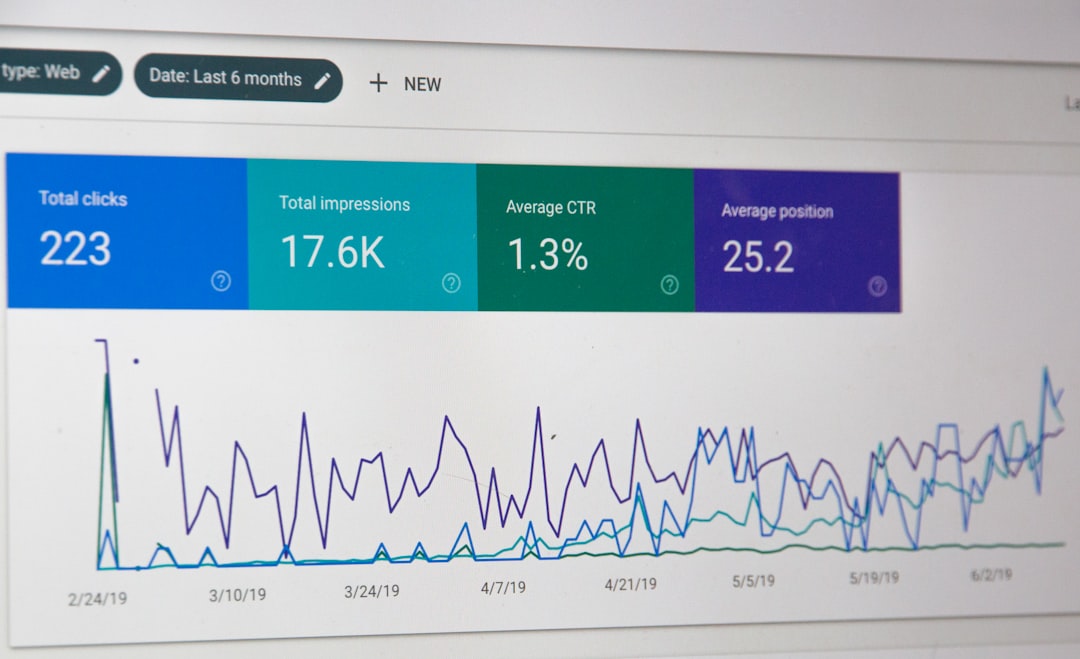
Google Search Console provides impression data regardless of whether users click. This is your baseline metric for zero-click SEO visibility. Track:
- Total impressions for target queries over time
- Impression share for branded vs. non-branded terms
- Average position alongside impression volume (a high-impression, low-click query might indicate snippet ownership)
Rank tracking tools with SERP feature detection add another layer. Look for tools that track not just your organic ranking but whether you own the featured snippet, appear in PAA boxes, or show up in other SERP features. Track feature ownership as a percentage over time, just like you’d track keyword rankings.
SERP monitoring tools can take automated screenshots or snapshots of results pages, letting you see exactly how your brand appears for key queries across devices and locations.
Connecting On-SERP Visibility to Downstream Conversions
The real question executives ask: “If nobody clicks, what’s the business value?”
Here’s how to connect the dots:
- Branded search volume trends — If your zero-click visibility increases for non-branded informational queries, watch for corresponding lifts in branded search volume. Users who see your brand in snippets today may search for you by name tomorrow.
- Direct traffic correlation — Monitor direct traffic trends alongside SERP feature ownership gains. Increases in direct visits often follow increased SERP visibility.
- Assisted conversion analysis — Use multi-touch attribution to identify whether users who eventually convert had prior SERP exposure to your brand through impression data.
- Phone calls and direction requests — For local businesses, track calls, direction requests, and messages that originate from Google Business Profile — these are zero-click conversions.
The pattern is consistent: SERP visibility creates brand familiarity, which drives downstream action through channels that don’t show up in a simple organic click report. If you’re exploring how to Welcome new approaches to content measurement, this mindset shift is essential.
Practical Examples of Zero-Click Wins in Action
Theory is useful. Real-world patterns are better. Here are two scenarios showing how businesses turned zero-click visibility into measurable outcomes.
Local Business Dominating the Map Pack Without a Website Visit
A multi-location dental practice noticed organic website traffic declining 18% year-over-year despite stable rankings. Instead of panicking, they audited their Google Business Profile presence and discovered that most patient acquisition was happening directly on the SERP.
Their strategy:
- Completed every GBP field across all locations, including service descriptions, insurance accepted, and appointment links
- Implemented a systematic review generation program that increased their average rating from 4.1 to 4.7 stars across locations
- Answered every question in the GBP Q&A section with detailed, helpful responses
- Posted weekly GBP updates with seasonal offers and educational content
Results over six months: phone calls from GBP increased 34%. Direction requests rose 22%. Website traffic continued declining slightly, but new patient bookings grew 28%. The SERP was the conversion surface.
B2B Brand Using Featured Snippets to Build Authority and Pipeline
A mid-market cybersecurity company targeted 50 high-volume informational queries in their space — terms like “what is endpoint detection and response” and “how to create an incident response plan.” These queries had high zero-click rates because users wanted quick definitions and frameworks.
Their approach:
- Created comprehensive resource pages structured with question-format headings and concise 40-60 word direct answers followed by detailed explanations
- Implemented FAQ and HowTo schema across all resource pages
- Built internal linking clusters connecting related topics to establish topical authority
Within eight months, they owned featured snippets for 23 of the 50 target queries. Organic click-through rates for those queries remained modest — around 8-12%. But branded search volume for their company name increased 41% during the same period. Demo requests from organic channels grew 19%, with attribution analysis showing that many converters had prior impressions on informational queries where the company held snippets.
The snippets didn’t drive clicks directly. They drove recognition. And recognition drove pipeline.
Frequently Asked Questions About Zero-Click Search Strategy
What Percentage of Google Searches Are Zero-Click?
According to SparkToro’s 2024 analysis of Datos clickstream data, approximately 58-60% of Google searches in the US end without a click to any external website. The percentage is higher on mobile devices and for informational queries. Some studies place the figure even higher depending on methodology and the inclusion of clicks to Google-owned properties.
Is SEO Still Worth It If Users Never Click?
Absolutely. SEO is evolving from a traffic-acquisition channel into a visibility and brand-authority channel. Even without clicks, appearing in featured snippets, knowledge panels, and PAA boxes builds trust, increases brand recognition, and influences downstream conversions like branded searches, direct visits, and word-of-mouth referrals. The value has shifted, not disappeared.
How Do AI Overviews Affect Zero-Click Rates?
Google’s AI Overviews (formerly Search Generative Experience) synthesize answers from multiple sources into a single AI-generated summary at the top of the SERP. Early data suggests they further reduce click-through rates for informational queries. However, AI Overviews cite sources with links, creating a new optimization opportunity. Pages that are cited as sources in AI Overviews gain visibility and credibility, even if overall click volume declines.
Which Types of Queries Are Most Likely to Be Zero-Click?
The highest zero-click rates occur with:
| Query Type | Example | Why It’s Zero-Click |
|---|---|---|
| Definitional | “What is a zero-click search” | Featured snippet provides the answer |
| Quick-fact | “Population of France” | Instant answer widget |
| Local | “Pizza near me” | Map pack shows options, phone, directions |
| Navigational | “Facebook login” | User clicks directly to the known site |
| Conversion/calculator | “USD to EUR” | Built-in Google tool |
Transactional and complex research queries still generate clicks at higher rates because users need to take action or evaluate options beyond what the SERP provides.
Can You Optimize for Zero-Click and Still Drive Traffic?
Yes. The dual strategy works like this: structure content to win SERP features (capturing visibility for zero-click queries) while simultaneously crafting compelling meta descriptions, using descriptive sitelinks, and building content depth that encourages clicks when user intent allows it. Not every query is zero-click. Many queries have mixed intent where a well-optimized listing can still earn the click — especially if your snippet teases deeper value.
How Does Schema Markup Help With Zero-Click SEO?
Schema markup (structured data) helps Google understand your content’s structure and purpose, making it eligible for rich results like FAQ accordions, how-to carousels, review stars, product information, and event details. These enhanced SERP features increase your visual footprint and provide more information directly on the results page. While schema doesn’t guarantee a rich result, it’s a prerequisite for many of them.
What Tools Help Monitor Zero-Click Performance?
Key tool categories for zero-click monitoring include:
- SERP feature tracking tools that detect whether you own snippets, PAA slots, or knowledge panels for target queries
- Google Search Console for impression data, average position, and CTR trends
- Brand monitoring platforms that track branded search volume and mention sentiment
- SERP snapshot tools that capture visual records of how your brand appears across queries, devices, and locations
- Analytics platforms with multi-touch attribution to connect SERP visibility to downstream conversions
Adapt Now or Disappear: Your Next Steps for SERP Dominance
The strategic mindset shift is straightforward: stop thinking of Google as a traffic source and start thinking of it as a visibility platform. Traffic is one outcome. Brand impressions, trust signals, and SERP-native conversions are others — and they’re growing in importance every quarter.
Here’s your prioritized action checklist:
- Audit your current SERP presence. Search your top 20 keywords and your brand name. Document every SERP feature, who owns it, and where you’re absent.
- Identify high-value zero-click queries. Find queries where your audience seeks quick answers and your brand can provide authoritative ones.
- Restructure content for snippet capture. Reformat existing pages with question-based headings, concise direct answers, tables, and lists.
- Implement schema markup across your site — Organization, FAQ, HowTo, Article, and Product schemas where relevant.
- Optimize Google-owned surfaces. Complete your Business Profile, publish on YouTube, and ensure your brand entity data is consistent across the web.
- Establish new measurement baselines. Start tracking impression share, SERP feature ownership, branded search volume trends, and zero-click conversions alongside traditional metrics.
- Review quarterly. The SERP landscape shifts constantly. What works today may need adjustment as Google rolls out new features and AI capabilities.
Search isn’t dying. It’s shapeshifting. The brands that win will be the ones visible at the moment of the question — whether or not anyone clicks.
References:
- SparkToro & Datos. (2024). 2024 Zero-Click Search Study.